

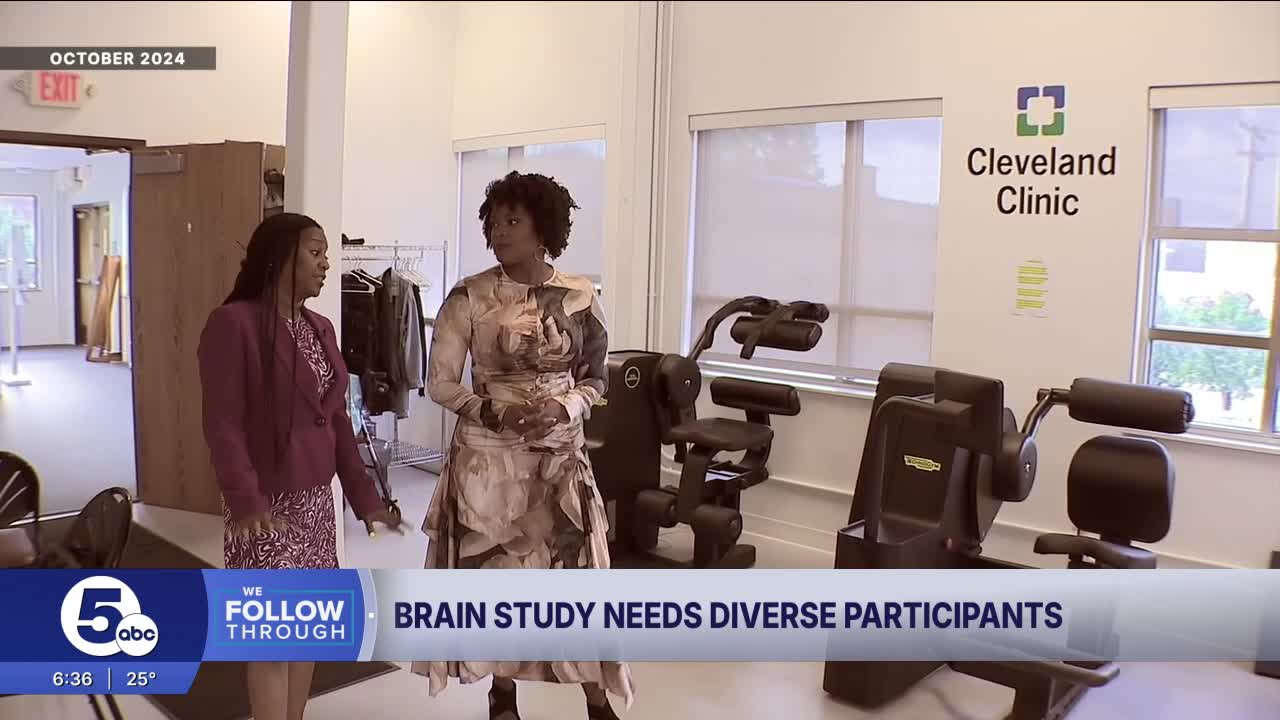


CLEVELAND — Next month marks four years since a one-of-a-kind brain study launched at the Cleveland Clinic, aiming to understand what happens in the body before neurological diseases develop.
Chronic neurological diseases can be life-altering for patients and their families. According to the Centers for Disease Control and Prevention, 6.7 million older adults have Alzheimer's disease, and that number is expected to double by 2060. The study will also look at epilepsy, stroke, and Parkinson's, among other diseases.
In October 2024, we reported on the need for more diverse patients for this study at the Cleveland Clinic. We're checking in on the progress of this groundbreaking research.
WATCH:
RELATED: Why are so many people diagnosed with brain diseases? You might hold the key
"He's good, he's great. He just repeats things all the time, but that's part of the illness itself," Graciela Alvarez Leon said.
Alvarez Leon said her 86-year-old father, Saul, who lives in Mexico, was diagnosed with early-stage Alzheimer's years ago.
"My father is the one that has the diagnosis, but the illness has affected my entire family," Alvarez Leon said.
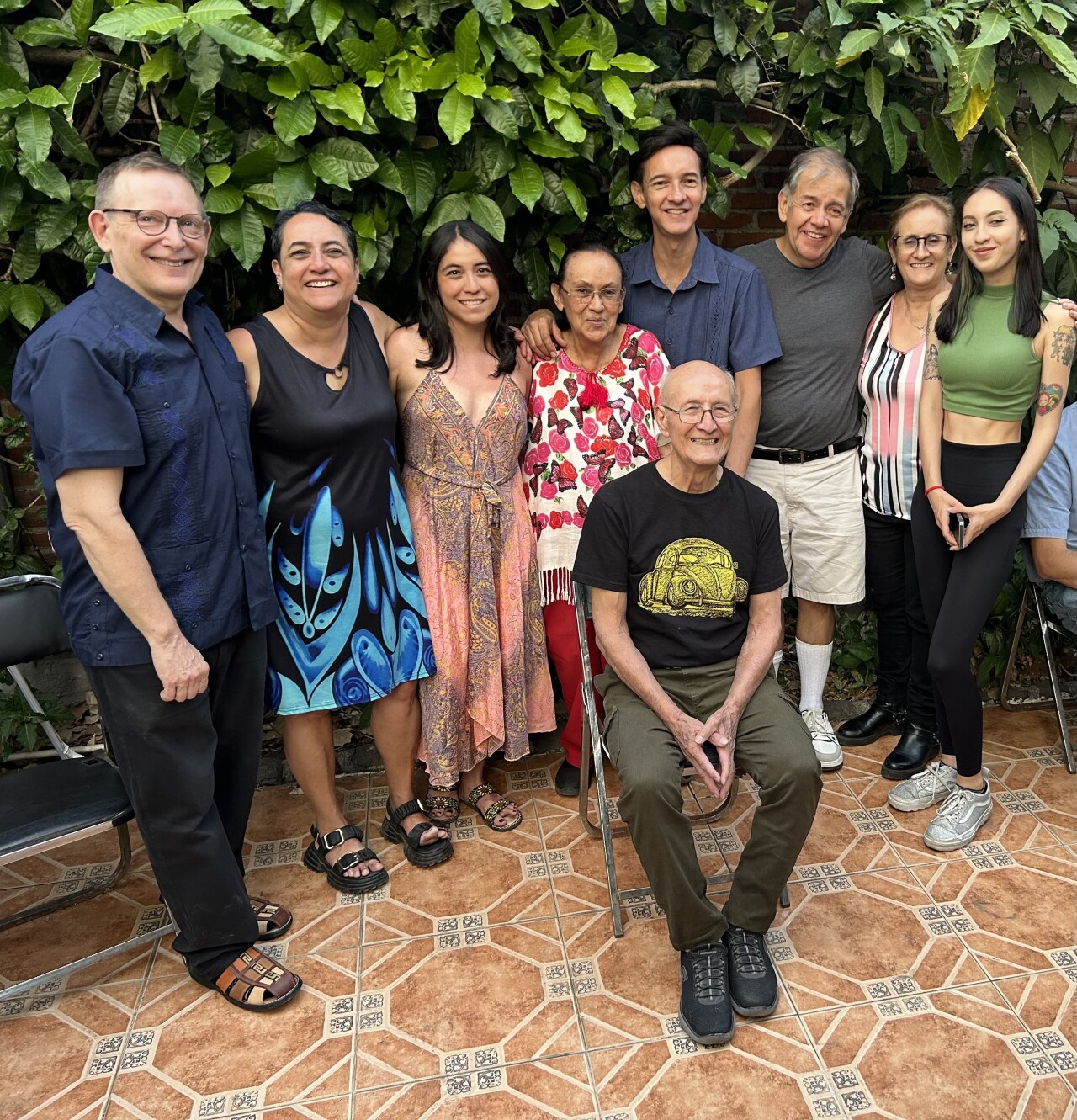
It's the reason she didn't hesitate to get involved in the largest brain study of its kind, launched at the Cleveland Clinic nearly four years ago.
Dr. Imad Najm is the director of the Epilepsy Center at the Cleveland Clinic and the vice chair of the Neurological Institute. He says the goal is to find out what's happening in the body before a neurological disease develops.
When we asked what it could mean for future generations if researchers come up with those answers, Najm was optimistic.
"The hope would be, if I'm going to be simplistic but optimistic at the same time, is to have a blood test to tell us, hey you are at risk of developing Alzheimer's and hey we may be able to give you something to delay it or prevent it," Najm said.
Since our October 2024 report highlighting the need for more Black and Hispanic volunteers to participate in this research, there has been progress.
"Since that time, we've seen people from various backgrounds and all walks of life come into us and now we're getting a much more balanced population in the brain study," Najm said.
Alvarez Leon isn't just a volunteer; she's also been advocating for the 20-year brain study and getting more people in her community to sign up. She's also a Cleveland Clinic employee who supervises a team that empowers pregnant mothers and their babies. Her personal experience and position in the community have helped.
"If I can talk about my experience, I can leave a door open, hopefully, they will do it eventually," Alvarez Leon said. "It's something that really needs to be done."
When we asked why she would participate in a study that wouldn't necessarily impact her father 20 years from now, Alvarez Leon had a clear answer.

"That could impact my daughter or I mean working with all these beautiful babies, you know, I mean I want to leave something for them," Alvarez Leon said.
So far in the study, Najm says researchers have learned what some volunteers are suffering from, outside of neurological problems. These are things that could be considered risk factors, like high blood pressure, diabetes, high cholesterol, a history of smoking and alcohol use.
"We're seeing quite a bit of heart related issues, we're seeing a good portion of our volunteers suffering from mental health disorders," Najm said.
The study now has more than 4,300 people actively enrolled from across the country, with researchers averaging 250 to 300 new registrations per month. Najm said the study has maintained an 8% attrition rate over four years, compared to the typical 20% for similar studies.
"We're dealing here with a very, very enthusiastic, committed group of volunteers who, no matter what, they're showing up," Najm said.
More people are needed to make this research a success, especially men. You must be at least 50 years old and have no history of neurological problems. However, if you have a first-degree relative with multiple sclerosis, you can be under the age of 50 and still get involved.
CLICK HERE to sign up.
