

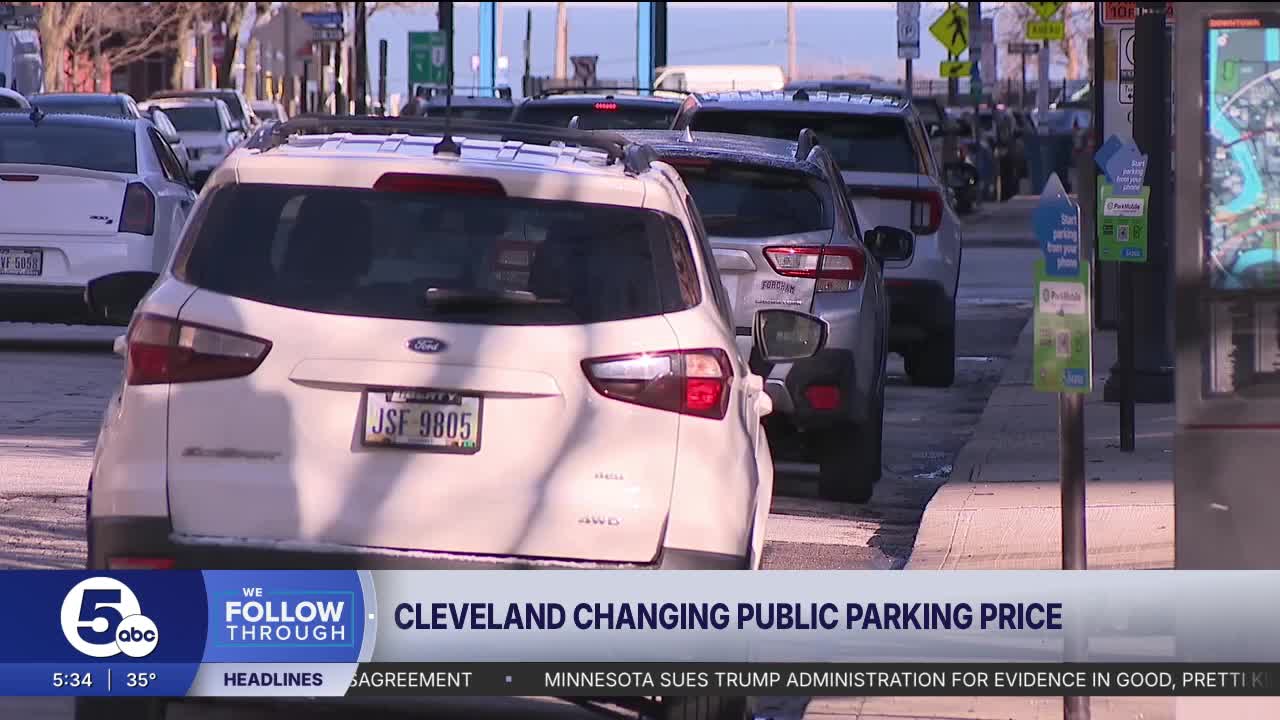


CLEVELAND — Three months into its new parking regulations and the City of Cleveland is already making changes.
The city said new, dynamic, responsive rates are now in effect for certain parts of Downtown Cleveland.
This means certain spots no longer have a four-hour parking cap.
Drivers in these spots will just have to pay the $1.50-per-hour base rate for the hours they park.
Affected spots include parts of Hamilton, St. Clair, Superior and Payne avenues.
The new method also applies to small sections of Prospect Avenue, East 17th Street, and Carnegie Avenue.
The City of Cleveland said it's making these changes after reviewing data from the first three months of using the ParkMobile App.
The new changes are also coming from conversations with local business owners, employees and other people who use street parking every day.
"It's really helped us craft solutions that really work for folks," Lucas Reeve, a senior adviser with Mayor Justin Bibb's office, said. "We are already getting feedback about the dynamic responsive zones where employees in the Warehouse District are saying this is a great solution for us. This provides another option and opportunity on where to park."
These changes come after the city rolled out new regulations at the beginning of the year, which included price increases and the end of free weekend parking downtown.
In addition to the new parking zones, the city has added bright yellow signs indicating that a pay station is nearby.
Cash or credit cards can be used at these pay stations to pay for your parking spot. The signs are another addition following community feedback.
The city also said it's working to set aside funds from paid street parking for community investment. Right now, a piece of legislation is moving through the Cleveland City Council that would create a parking benefits fund.
The idea is that somewhere between $1.25 million and $1.5 million would go toward safety and mobility improvements, such as adding speed tables or fixing lighting and sidewalks.
