

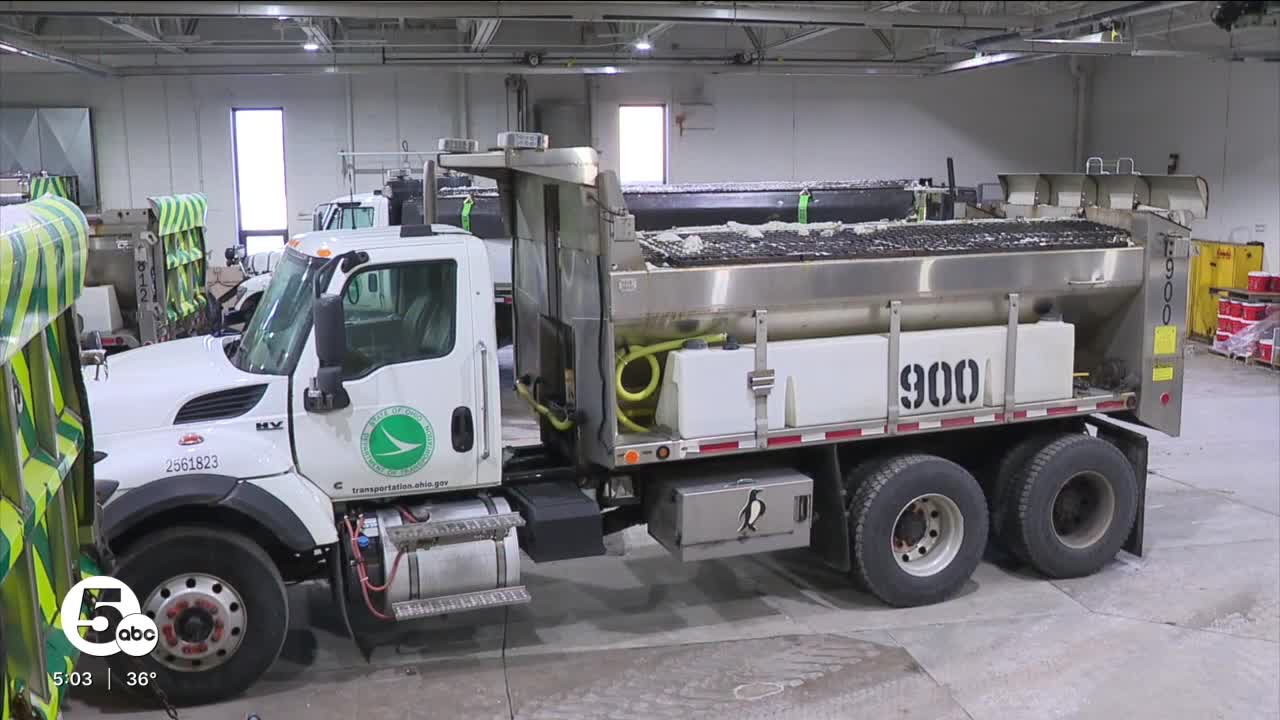


CLEVELAND — As weather conditions began to rapidly shift overnight in Northeast Ohio, ODOT is positioning crews and equipment to respond to potentially slick, hazardous roadways.
Amanda McFarland, public information officer with ODOT, says the department is monitoring conditions and reacting in real time.
"Things could be a little tricky during the Friday morning commute, but we're gonna be staged and ready to go as soon as that transition happens from rain to snow. We will be out there treating the roadway," McFarland said.
More than 200 ODOT plows and salt trucks with crews working 12-hour shifts are currently deployed across Northeast Ohio, she says.
The department has well over 200,000 tons of salt available for the operation.
Crews have been working overnight, monitoring the potential for re-freezing on roadways.
Ramps, bridges and overpasses remain the primary concern, as these surfaces freeze first.
However, McFarland says the current weather shift presents some unique challenges.
With rain falling first and temperatures remaining relatively high, crews cannot effectively pre-treat the roads.
Any salt previously applied has washed away, and additional salt thrown down would also wash away before becoming effective. Instead, she says crews will react as conditions change from rain to snow or the roads become icy.
McFarland is urging drivers to use extra caution around ODOT plows. She says several have already been struck this winter, and it's becoming a growing problem.
"As of Friday morning, we are at 17 snowplows that have been struck this winter, and that's really between Thanksgiving and now, so approximately four weeks we've had 17 struck. It's too much," McFarland said.
McFarland is asking drivers to keep a safe distance from other cars and ODOT plows.
She is encouraging drivers to reduce speeds, ditch the distractions and give themselves extra time.
