

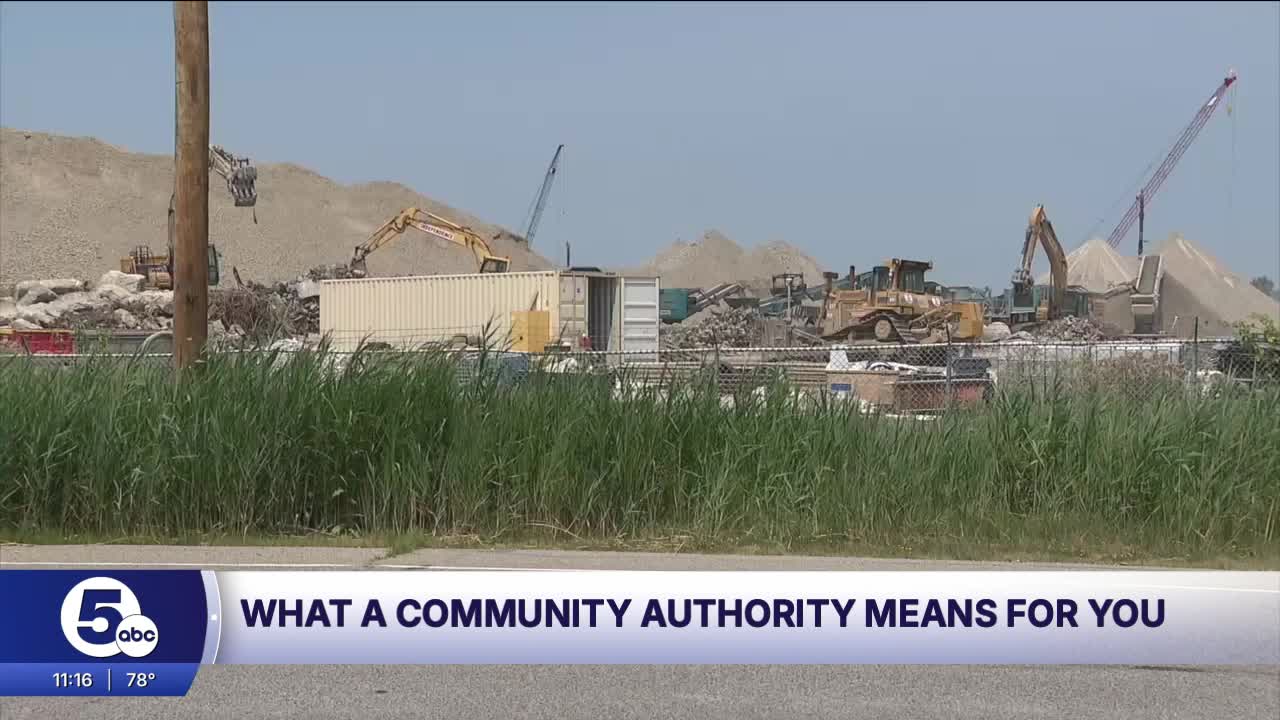



BROOK PARK, Ohio — Brook Park City Council is set to vote Wednesday night on legislation to form a mini-government — a special public entity that will own the new Cleveland Browns stadium.
The Brook Park New Community Authority, or NCA for short, will be able to do much more than owning real estate and inking a lease with an NFL team. It will have the power to issue bonds to help pay for development and upkeep. And it will be able to impose charges on property owners and visitors across the broader 178-acre stadium district.
The NCA is a key building block for the $2.6 billion enclosed stadium and the adjacent mixed-use development. But it’s just one piece of a complicated puzzle — a public-private funding strategy for construction and maintenance that’s still coming into focus.
"Right now, it’s difficult for us to be able to give all the details,” Mayor Edward Orcutt said during an interview Tuesday.
The city’s still working with team owner Haslam Sports Group on a detailed development agreement, which will spell out the commitments both sides are making. It’s unclear when that agreement will go before council for approval.
“There’s so many pieces that we still continue to work on and make sure we tighten the screws on. … You’re going to see legislation over the next year, 18 months or longer, and mountains of paperwork and agreements,” Orcutt said.
RELATED: What Brook Park is giving — and getting — so far in stadium talks with Haslam Sports Group
But launching the NCA is a significant step forward, if council signs off.
A public hearing about the authority is set for 7 p.m. Wednesday at Brook Park’s municipal complex at 17400 Holland Road. A special council meeting will take place immediately after the hearing.
New community authorities are flexible and powerful economic development tools. Local governments and developers have used them for years in central Ohio, starting with sprawling subdivisions in rural areas and expanding to mixed-use, urban projects.
Haslam Sports Group is building on a playbook the organization and public partners used in Columbus to help build a new soccer stadium. An NCA owns that stadium, which is leased to the Columbus Crew — a team owned by the Haslam family, the Edwards family and insurance company Nationwide.
Greg Daniels, an economic development lawyer in Columbus, said new community authorities exist “so development can help pay for itself” and take burdens off local governments and taxpayers.
A partner at the Kutak Rock law firm, he’s worked on NCA deals scattered across the state.
Daniels does not represent Haslam Sports Group and isn’t involved with the stadium project here. But Kutak Rock represents Lincoln Property Company, a real estate developer teaming up with Haslam Sports Group on the mixed-use part of the Brook Park sports and entertainment district.
“Urban redevelopment is very expensive,” Daniels said. “And you always need a lot of up-front cash to remediate sites and build the infrastructure that’s necessary.”
The Brook Park NCA will be governed by a nine-member board — made up of Orcutt, four community members picked by city officials and four people chosen by Haslam Sports Group. The board meetings will be public, and many big decisions will still require approval from the mayor or city council.
Public records show Haslam Sports Group, which owns the entire site, will turn over roughly 42 acres to the NCA for the stadium project. The NCA will then lease the stadium parcel back to a Haslam Sports Group affiliate for at least 30 years. The stadium will be exempt from property taxes.
The NCA will have the ability to issue bonds to help pay for construction. It will also collect money from sales of personal seat licenses — one-time fees that give fans exclusive rights to buy season tickets for the same seats, year after year. The Browns have said every seat in the new Huntington Bank Field will require a personal seat license.
Founding documents for the NCA state that money from seat-license sales must go toward paying for stadium construction. The Browns will manage the license sales, which are expected to start later this summer.
RELATED: Longtime Browns fans outraged by possible seat-license pricing in Brook Park
In addition to owning the stadium, the NCA could own public infrastructure in and near the district, including streets, parks, recreational facilities, parking lots and garages. The NCA documents say the authority will work with the city and Haslam Sports Group to identify off-site parking locations for days when the stadium hosts major events.
The NCA will also be responsible for programming and events across the district.
To pay for its work, including development and upkeep, the authority will have the option to levy charges — fees paid by property owners or people spending money in the district. The NCA documents spell out the maximum possible charges:
- 3.5% tacked onto the price of admission to concerts and other ticketed events happening anywhere in the district. That charge would not apply to NFL events. In addition to the 67,500-seat stadium, the development plan for the district calls for a smaller music venue and event space, with a capacity of 3,000 to 4,000 people.
- 10% added to purchases at restaurants and retailers. Under the maximum charge scenario, that means you’d pay an extra $3 on a $30 t-shirt purchase. Plans for the district include about 260,000 square feet of retail.
- 8% added to hotel bills. The master plan for the site shows two hotels.
The authority will also have the ability to impose fees on real estate in the district based on property values. But the owners — the NCA, Haslam Sports Group and any other entities created to own real estate there — would have to agree to those charges.
Some of that money could go toward capital repairs and operations at the stadium.
"My personal take is that we want to be able to operate this thing at the lowest cost for the consumer,” said Orcutt, adding that the NCA framework simply provides options.
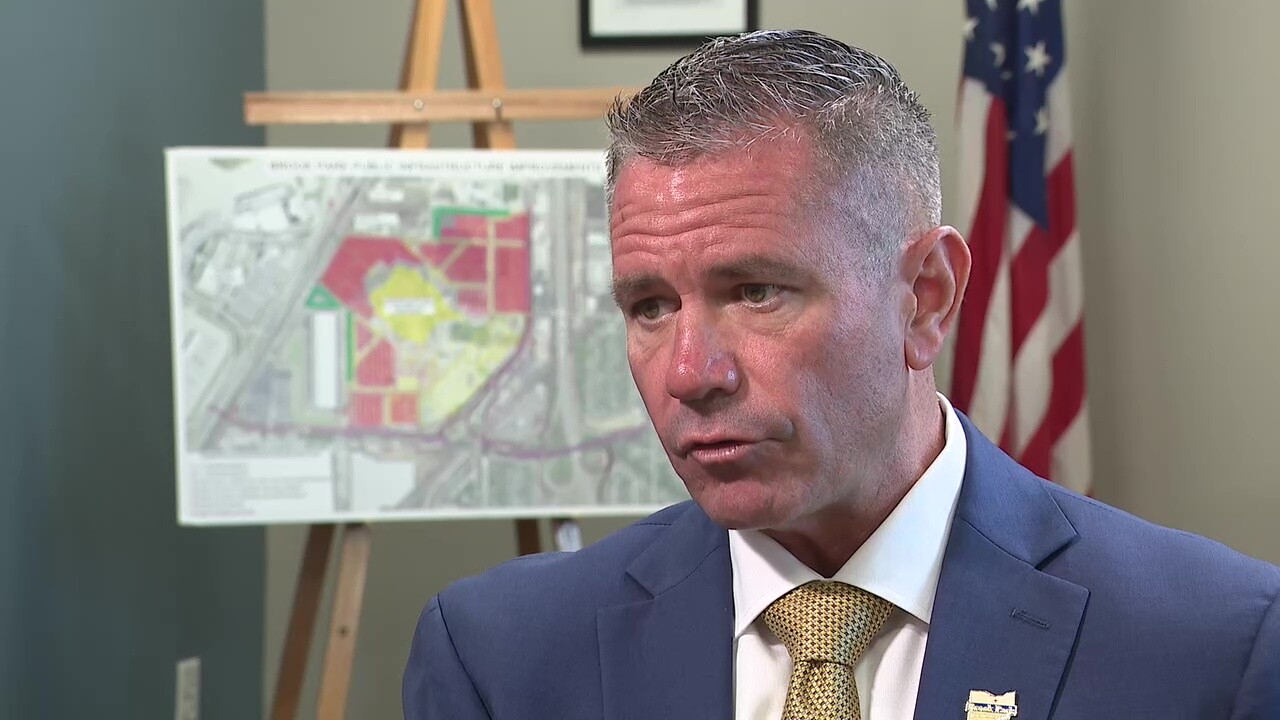
In other words, those maximum possible fees aren't necessarily what you're going to see.
Daniels said local governments and developers look for a sweet spot when it comes to setting those surcharges, known as “community development charges.” The goal is to generate enough money to pay for development without scaring off customers or property owners.
"It’s called a charge because it’s not a tax,” Daniels said. “And that’s very important. We’re not talking about additional taxes that are levied on taxpayers in general.”
In other districts across the state, he often sees NCA charges of 0.5% to 2% added to restaurant tabs. At hotels, NCA charges typically fall between 1% and 3% of a bill, though he’s seen them climb as high as 5%.
Any NCA fees must be spelled out on people’s receipts.
"It’s a little bit of extra cost for people that go there,” Daniels said of districts governed by new community authorities. “But you know, as they say, there’s no free lunch. If you want a nice development, if you want a place that’s attractive for you to go to, there’s a cost.”
In the Cleveland area, there are only two existing NCAs.
There’s one in Richmond Heights, where a developer is transforming the Richmond Town Square mall site into a mixed-use project, with a self-storage facility, a Meijer store, other retailers and apartments. And there’s one in Cleveland, where the NCA district spans city-owned property on and near the downtown lakefront.
Cleveland created the North Coast Waterfront New Community Authority last year as part of the groundwork for lakefront development. At the time, Cleveland City Council set a cap on surcharges at $5 for parking, $2 on admissions and 5% on retail sales.

So far, though, the NCA is only charging fees on parking at certain city-owned lots and garages. Customers are paying $1 extra on weekdays, $3 extra on weekends and $5 extra to park during special events. The authority still needs to negotiate surcharges with the museums and businesses in the district.
“We’re starting to see a lot more growth in Northeast Ohio. You’re gonna see more of these,” Daniels said of NCAs.
In Brook Park, Orcutt said he’d like to talk about the rest of the financing plan for the stadium district “sooner than later.”
The state pledged $600 million in people’s unclaimed funds to the stadium, but that money’s still tied up in litigation.
The city’s talked about putting $245 million into the stadium by pledging income-tax revenues and admission-tax revenues from the broader district to the project. Haslam Sports Group has said that at least $1.75 billion will come from private sources.
The neighboring development, with a potential price tag of $1 billion, is likely to involve tax incentives. The city’s also tapping state and federal sources to pay for road upgrades, sidewalks and a pedestrian bridge leading to the stadium.
Then there's the question of maintaining the stadium during a decades-long lease — and how to pay for that. In Cleveland, dedicated funding streams from taxes on alcohol and cigarettes aren't keeping up with the needs of Progressive Field, Rocket Arena and the aging NFL stadium. Public officials and pro sports teams are exploring options to fill the gap.
"We would certainly hope to work with our regional partners," Orcutt said of securing funding for repairs and eventual upgrades to the new Huntington Bank Field. "When I say that, we're talking directly to the county. We want to make sure that Brook Park isn't left out."
Construction workers are busy moving dirt on the suburban site. Haslam Sports Group aims to open the new stadium in time for the start of the 2029 NFL season. But, Orcutt stressed, there’s still a lot of logistical work to do.
"It needs to make financial sense for the city of Brook Park,” he said of math around the stadium and entertainment district.
“When we do see it, it’s going to be right,” he said of the development agreement. “That’s when you’ll see it. When it’s right.”
Michelle Jarboe is the business growth and development reporter at News 5 Cleveland. Follow her on X @MJarboe or email her at Michelle.Jarboe@wews.com.
