




CLEVELAND — Shaun Dorsey has spent most of his life in the city’s Mount Pleasant neighborhood, where he inherited a family home — a duplex he plans to pass on to his daughter.
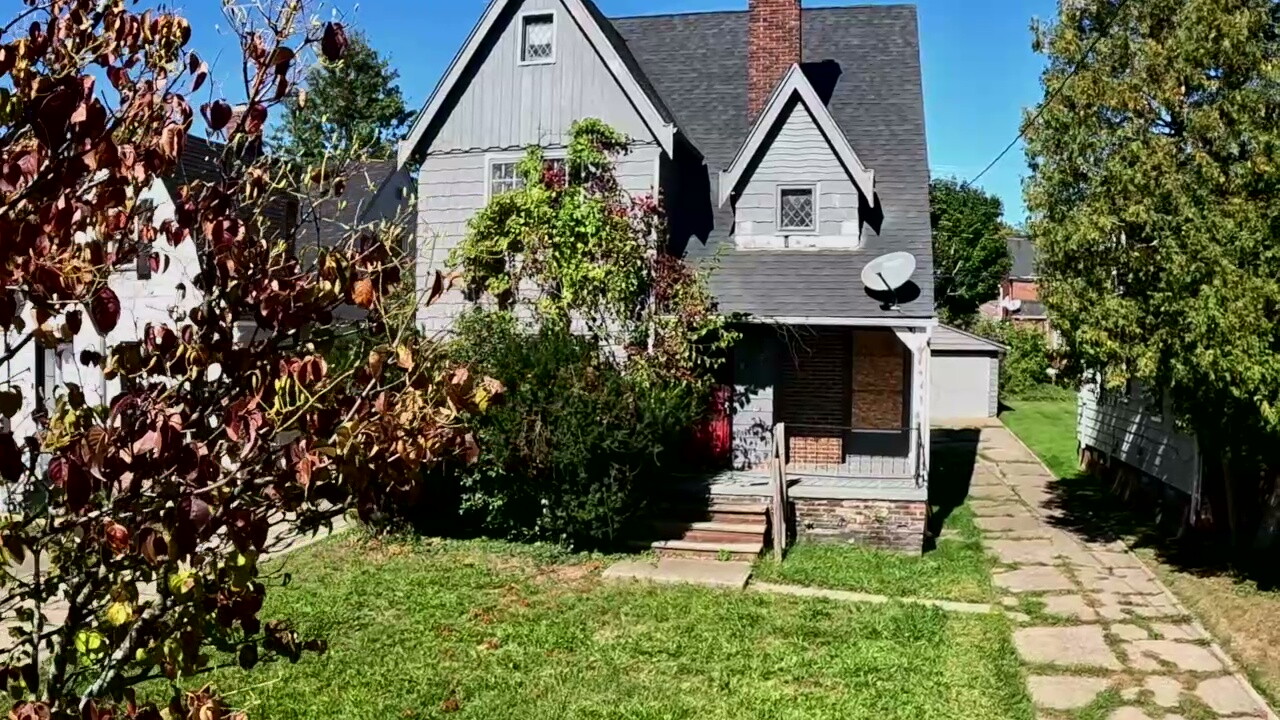
He loves most of his neighbors. But he hates the dilapidated house next door.
It’s vacant and boarded up, condemned by the city. And it’s a magnet for rodents and trash.
“There’s a lot of people that do drugs that keep going in there,” he said. “And every time I close the doors, they come right back in.”
It turns out that the property, on East 113th Street, is part of a much bigger problem.
In April 2025, a Baltimore-based investment group bought more than 170 houses in Cuyahoga County with the goal of fixing up the homes as modestly priced rentals. But that vision quickly turned into a nightmare — for everyone involved.
In Cleveland, most of those homes are sitting vacant. The owner, Riparian Capital Partners, is facing dozens of code-violation notices and escalating fines. In a report set for release Wednesday, and shared in advance with News 5, local researchers and community organizers are urging city officials to keep up the pressure.
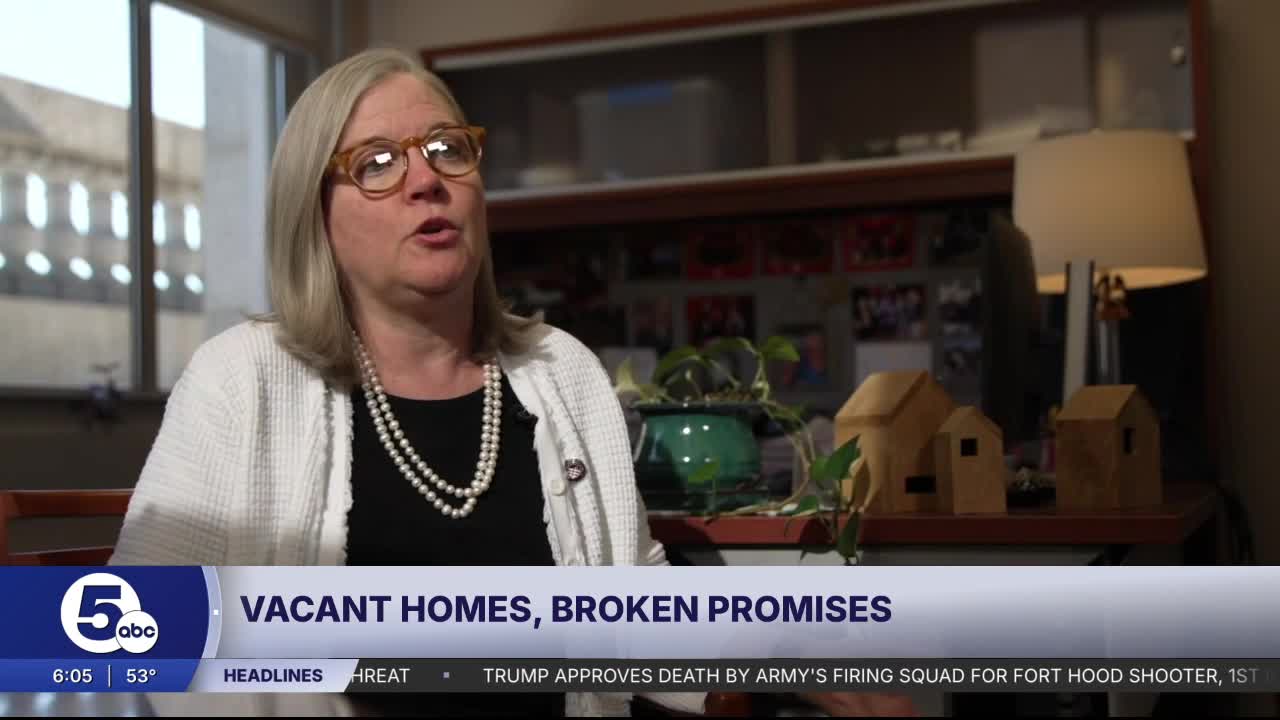
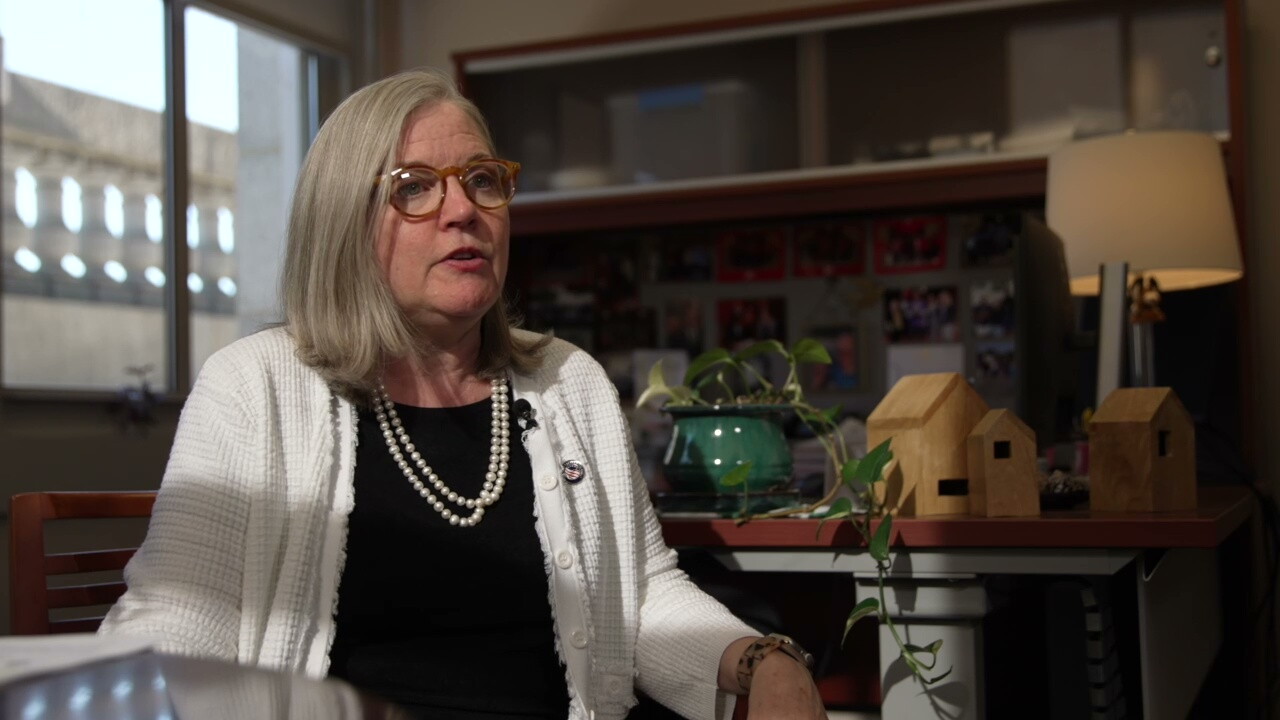
“It’s a new day in Cleveland,” Sally Martin O’Toole, the city’s director of building and housing, said during an interview. “And if you think you can come in and buy properties and do nothing with them, think again.”
The Vacant and Abandoned Property Action Council and ACORN International spent three months looking into Riparian’s business model and holdings here. In July and August, ACORN’s community organizers canvassed the city, visiting 153 homes owned by Riparian. They found that 79% of the houses seemed to be empty.
“It was shocking,” O’Toole said of the widespread vacancy. “Especially since initially they posed as a really good actor that wanted to do good in the community and wanted to get these properties back into productive use for people who need them.”
Most of those homes are on the East Side, in neighborhoods that still bear the scars of the 2007 foreclosure crisis and a subsequent wave of abandonment and blight. Investors have flocked to those areas because of the relatively low home prices and stable rents.
“One thing I’ve observed over the years about investors who come to Cleveland is they often miscalculate several things,” said Frank Ford, a senior policy advisor at the Fair Housing Center for Rights & Research in Cleveland and one of the contributors to the report.
“They miscalculate what the market is,” he added. “They think properties might be worth more. … But I think they also, investors generally, miscalculate the city of Cleveland — and the willingness of the city to take aggressive action.”
O’Toole said she met with Riparian executives in May 2025, soon after the company acquired the local properties as part of a bigger, multi-state real estate transaction.
But the conversation stopped there.
“I’ve reached out numerous times, and I have not gotten anything back,” she said.
During a phone interview Tuesday, Riparian CEO Kris Garin acknowledged the lapse in communication. He said the company walked into a mess — and is searching for an exit.
“There’s nothing more important than safe, quality housing for people, right?” he said. “And you know, the history of this industry in this space, I think, rightly has people very skeptical of investors and operators of all kinds. And we understand that.”
But he characterized Riparian as a victim, not the villain, in this story.
“I’m not asking anybody to feel sorry for us,” he said. “We set out to do something, and not everything works out the way it’s supposed to.”
In the spring of 2025, Riparian bought roughly 1,000 homes in Ohio and other states from a floundering real estate investment fund run by Voyager Pacific Capital Management.
A year later, the U.S. Securities and Exchange Commission charged Voyager and its executives with fraud, accusing them of taking money out of the real estate fund, providing fake financial information to investors and concealing their actions by using cash from new investors to make payments to old ones.
Voyager’s former CEO ultimately pled guilty to conspiracy to commit wire fraud.
Riparian knew the Voyager properties were heavily vacant. But the houses were in much worse shape than the company expected.
Garin said Riparian’s business model centers on buying and sprucing up affordable rental properties. The company has the capacity to redo a kitchen, replace a roof or fix up a basement — but not to do all those things at the same time across hundreds of homes.
“We realized very quickly that we had to change direction,” Garin said.
Last year, Riparian started marketing the houses for sale. By December, the company had found a prospective buyer for the most challenging properties in Cleveland, Garin said. But Riparian has spent almost a year working through lender approvals and other red tape.
“We think we’re very close now,” said Garin, who wouldn’t identify the buyer. “But it’s been a long and frustrating process for everybody.”
He said the new group has experience rehabilitating deeply distressed properties.
City officials and neighbors say something has to change.
“We need to certainly get them either moving in the right direction to becoming code compliant, or someone else needs to take over the properties,” O’Toole said.
Public records show Riparian recently filed for construction permits at a few addresses, including the vacant house on Dorsey’s street.
But, O’Toole said, “we really haven’t seen a lot of activity with repairs. I think where they feel under the gun or close to having a property razed, they are trying to put forth a little bit more effort.”
Now the vacant property council and ACORN organizers are asking the city to file a civil lawsuit against Riparian, seeking to have the houses classified as a public nuisance. The report’s authors also are encouraging the city to conduct interior inspections of all the houses, seeking search warrants from the Cleveland Housing Court if necessary.
“This does not represent all investors in Cleveland,” Ford said. “There are many good investors. But they're the ones who, after acquiring properties, wouldn't wait a year and a half to file a permit, wouldn't let it sit this way. So my hat's off to the investors who do the right thing, are willing to spend money — and are also going to be careful, and not just grab up 150 properties in Cleveland without checking it out first.”
Dorsey doesn’t care who owns the condemned house next door, as long as it gets cleaned up.
In June, he complained to the city after an attic window blew out, sending glass cascading into the street. Dorsey used to mow the front yard himself, to keep the grass in check. But higher gas prices have caused him to pull back.
“I shouldn’t have to do all this,” he said. “This is not my house.”
Michelle Jarboe is the business growth and development reporter at News 5 Cleveland. Follow her on X @MJarboe or email her at Michelle.Jarboe@wews.com.
