

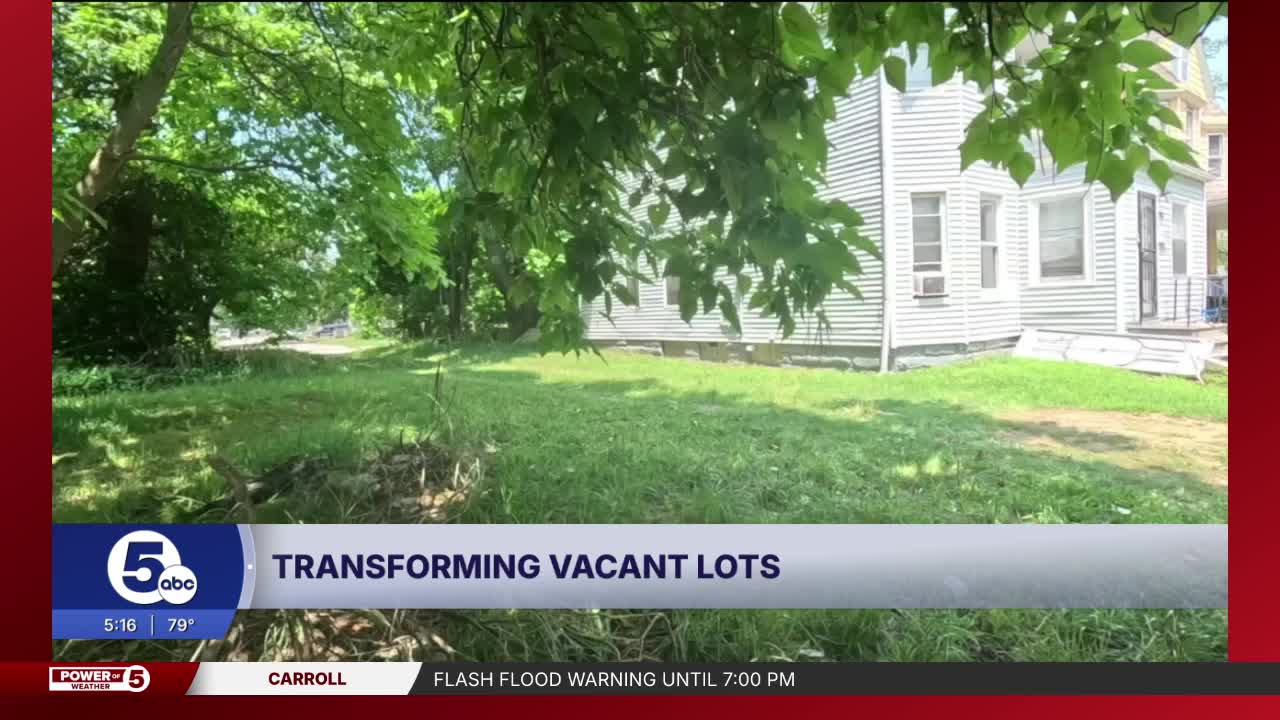



CLEVELAND — As an urban farmer in Hough, Jamel Rahkeera knows the value of a patch of shade.
Village Family Farms is flanked by tall trees, offering respite from the sweaty work of planting seeds, pulling weeds and tending to all sorts of crops, from tomatoes and herbs to orange-fleshed watermelons and okra.
Rahkeera, 46, launched the farm in 2010 to fill a need for fresh fruits and vegetables in the neighborhood where he grew up. Now formerly vacant lots off Crawford Road, behind the Thurgood Marshall Recreation Center, teem with native plants and produce. Kids come there for summer nature camps. Neighbors lovingly tend to a row of community gardens.
“Cleveland, you know, we only get four or five months of good weather every year,” Rahkeera said. “During that time, people want to see flowers, right? They want to see trees, different varieties of trees to help, you know, improve our air quality. … People just want to see nice, green, safe, clean spaces right here.”
Now a $10 million grant will help create more spaces like that on the city’s East Side, in Hough and neighboring St. Clair-Superior. On Tuesday, the Bezos Earth Fund — guided by Amazon founder Jeff Bezos and his wife, Lauren Sánchez Bezos — announced the award as part of a broader, multi-city initiative to turn underused urban land into green spaces.
In Cleveland, the money will flow to the Western Reserve Land Conservancy, which is working closely with the city. Over the next three years, the conservancy expects to clean up 600 vacant, city-owned lots by ripping out brush, removing invasive plants, pulling down remnants of old fences and planting and maintaining roughly 2,400 trees.
Many of the properties will become passive green spaces, offering shade to people passing by. Others could serve as pocket parks, gathering places or community gardens.
“The data points us on where we want to go, but we’ll really listen to the residents on what comes next,” said Isaac Robb, the conservancy’s chief urban program officer.
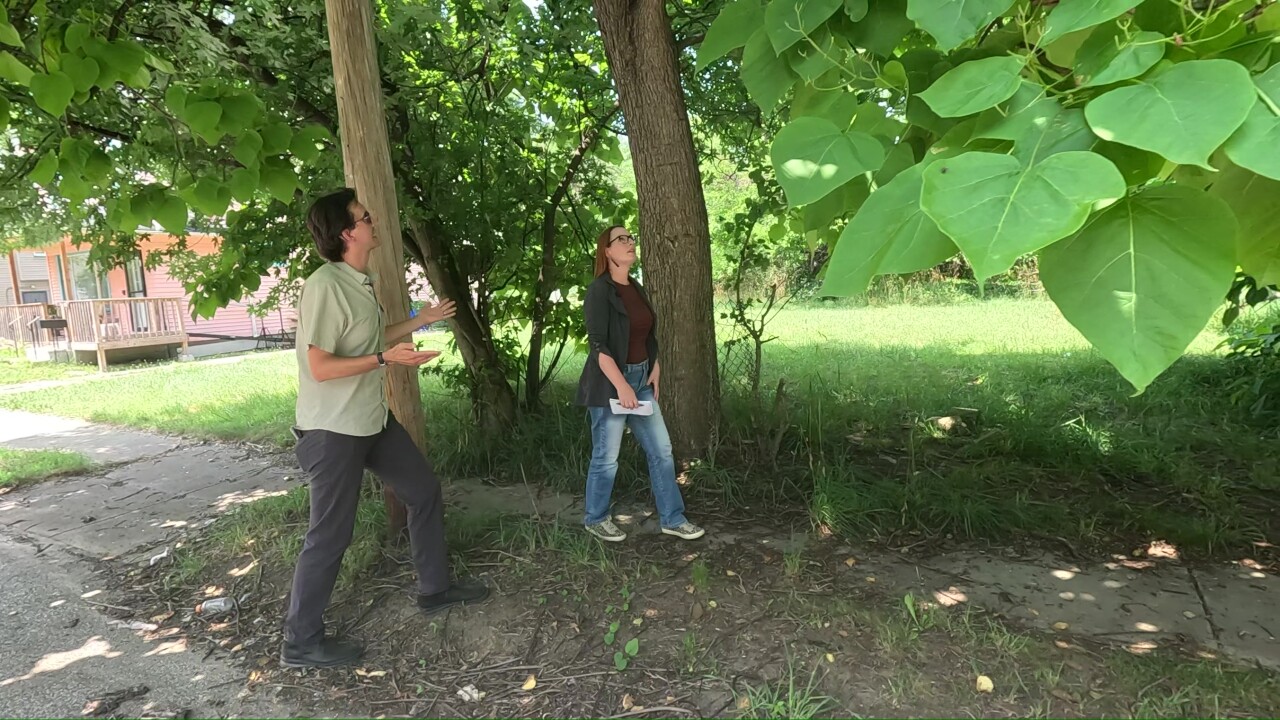
During a walk in Hough on Thursday afternoon, Robb pointed out how uneven terrain and tangles of brush make it difficult for city crews to mow the grass. A large, mesh satellite dish stands on one vacant lot — the only reminder that there used to be a house there.
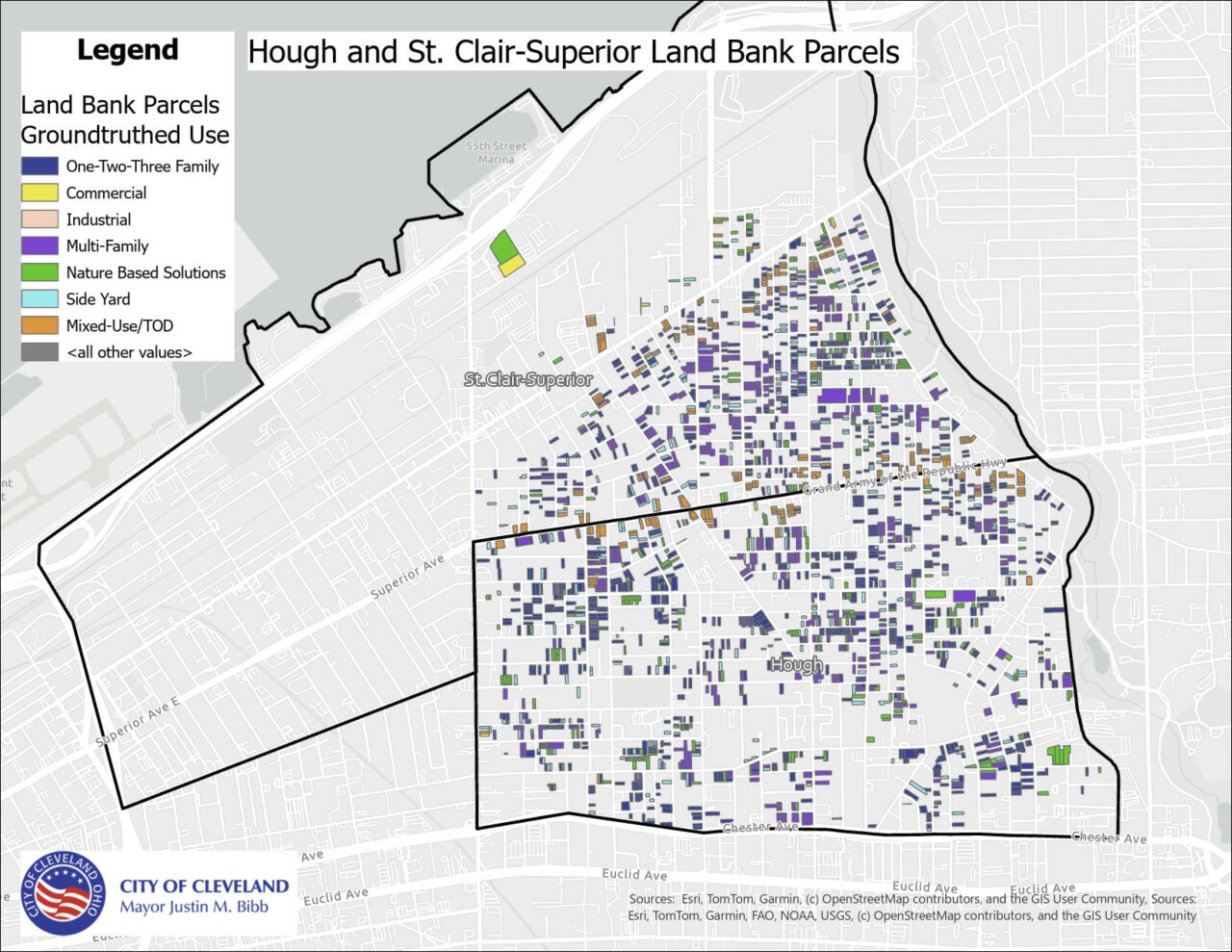
Robb says there are approximately 2,600 vacant lots scattered across Hough and St. Clair-Superior — scars from the foreclosure crisis and decades of disinvestment. About 80% of those properties are publicly owned.
A few years ago, city planners came up with proposed uses for the land and worked with neighbors, the conservancy and local community development corporations to reject or confirm those recommendations. Residents who participated got paid for their time.
Many of the lots are earmarked for eventual development, with a focus on housing. The 600 properties slated as future green space are spread throughout the neighborhoods, offering opportunities to weave nature into almost every block.
“We’re hoping to really get started in earnest this fall and into the spring,” Robb said. “The fall and the spring are the two best times to plant trees.”
The conservancy will water each tree every week for three years and handle pruning for the first six years. Maintenance will be a shared responsibility between the conservancy and the city. Robb said neighbors and block clubs also will be part of the equation.
“This is really something that everyone in these neighborhoods should be empowered to benefit from,” he said. “And we really hope that through this funding, we can do it on a scale that we’ve never been able to do before.”
It’s no coincidence that the grant is going to Hough and St. Clair-Superior.
Those areas are seeing a wave of public and philanthropic investments, from public art to planned upgrades to streets, parks and business districts. The Cleveland Foundation is playing a major role in Hough, while the Jack, Joseph and Morton Mandel Foundation has a strong interest in St. Clair-Superior.
Both neighborhoods are part of the city’s nascent housing innovation district, where Cleveland plans to streamline construction permitting, waive fees and try to boost building and homebuying through incentives. They’re also both potential locations for new modular homes, as the city looks to factory-built housing to fill gaps in the market.
RELATED: Cleveland taps modular housing manufacturer to remake historic East Side factory
“The idea of layering all these different kinds of investments is meant to have that transformative effect over time,” said Matt Moss, the city’s deputy director for land strategy. “And hopefully we’ll see that happen over the next three years. … We’re doing everything we can, and everything that a city can provide in these neighborhoods, in a very coordinated, orchestrated, concentrated way.”
On Linwood Avenue in Hough, Moss pointed out vacant lots where the conservancy already cleared overgrowth and planted small trees. A short walk to the north, at East 85th Street and Wade Park Avenue, a walking path cuts across a corner lot, where benches give people the option of sitting for a moment.
As the city tries to do more with underused real estate, from vacant land to aging buildings, construction isn’t the only way to add value, he said.
“Instead of these lots being viewed as places that are nuisances, places where trash collects or where people dump unwanted things, how can we transform them into things that are actually assets, things that people enjoy? … Let us know how we can make these the most valuable, viable, enjoyable spaces they can be for people,” he said.
At Village Family Farms, down the street, Rahkeera sees the possibilities. He knows what a huge impact it can have on people when there’s a well-maintained green space just a 2-minute walk or 5-minute walk away. “This is my happy place,” he said of the farm.
Working with fellow urban farmers and conservationists, he’s trying to train the next generation of environmentalists, city gardeners and tree stewards.
“Moving forward, for the next 30, 40, 50, 60 years, we can really build out that green infrastructure and re-vision what Cleveland looks like, making a greener city,” he said.
Michelle Jarboe is the business growth and development reporter at News 5 Cleveland. Follow her on X @MJarboe or email her at Michelle.Jarboe@wews.com.
