

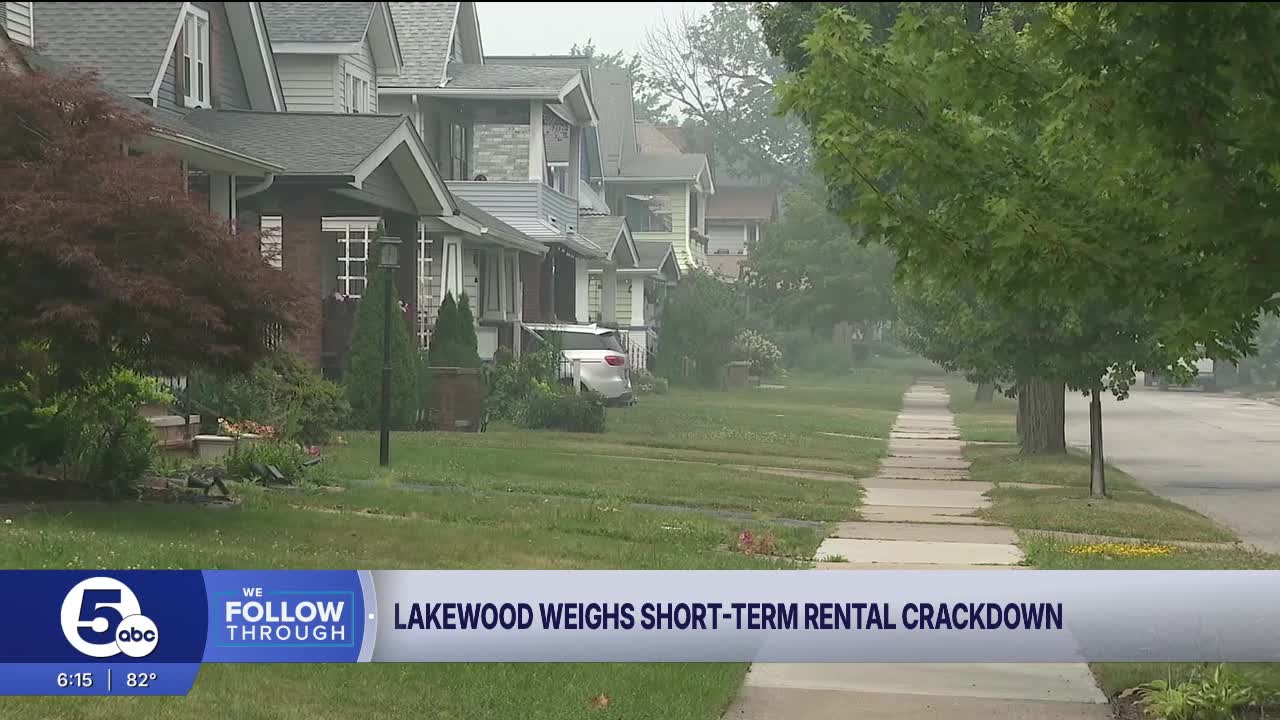


LAKEWOOD, Ohio — Airbnb, Vrbo, Zillow, Booking.com. These are just a few of the websites where you can book a short-term rental. But in Lakewood, some residents say those rentals are creating problems.
Earlier this summer, we told you about one rental property that generated 58 police calls in just two years. Now, Lakewood City Council is considering whether new regulations are needed. On the surface, Ben Jasinski's street looks quiet. But he says that's far from the reality he's experienced.
“Bottles thrown at our house and police were arresting people,” Jasinski continued. “One time, this gentleman tackled three police officers in the yard. I thought someone was going to get shot.”
He says many of the problems stemmed from the short-term rentals on his street, where there are two or three of them.
“I would like to see better management of them. I'm not anti-Airbnb. I've stayed in plenty myself, but I think the people who own these things need to understand that they're in neighborhoods,” said Jasinski.
As for Dave Stokely, he supports short-term rentals.
“That perception that short-term rentals are party houses is simply not true when you get into the data,” said Stokely.
He's a Lakewood resident who manages short-term rentals through his company, Host Pros.
“We host tens of thousands of nights every year at our properties, and we have very, very few problems and that's because we're doing it right,” said Stokely.
He says he doesn't oppose regulation but worries it could go too far.
“Things like density limitations. Like the city of Cleveland just passed a rule that no more than 10% of the units on any given street could be a short-term rental,” said Stokely.
That comes as Lakewood continues to receive a growing number of complaints about short-term rentals. That's why councilman Tom Bullock has introduced a draft ordinance to consider regulations.
“What I proposed was to clarify that a law governing bed and breakfast that has been a part of Lakewood laws for 20 years would also apply to Airbnbs,” said Bullock.
That law includes requirements such as owner occupancy, guest limits, and restrictions on events held at the property.
“For me, the bottom line is that neighborhood quality and housing quality is a red line we're not going to cross and we're not going to harm, and we're not going to have any patience for erosion of that sense of safety,” said Bullock.
He said council wants to be thoughtful about how it moves forward, so it may take time before they can agree on a legislation and what would apply.
“Banned, regulated, limited, all of it is on the table, but we're still in the early stages,” said Bullock.
Stokely agreed that any changes should be carefully considered.
“My real objection is when the cities don't understand the impact that it's going to have on the people they're legislating,” said Stokely.
Meanwhile, Jasinski said he'd like to see action sooner rather than later.
“I understand city government moves slowly, but I would like to see the pace picked up and maybe some enforcement in the meantime,” said Jasinski.
Nadeen Abusada is a Cuyahoga County and immigration reporter at News 5 Cleveland. Follow her on Instagram NadeenAbusada or email her at Nadeen.Abusada@wews.com.
