



LAKEWOOD, Ohio — Power outages have become a persistent problem for customers of FirstEnergy and Cleveland Public Power, and now state lawmakers are pushing to make energy companies pay for it.
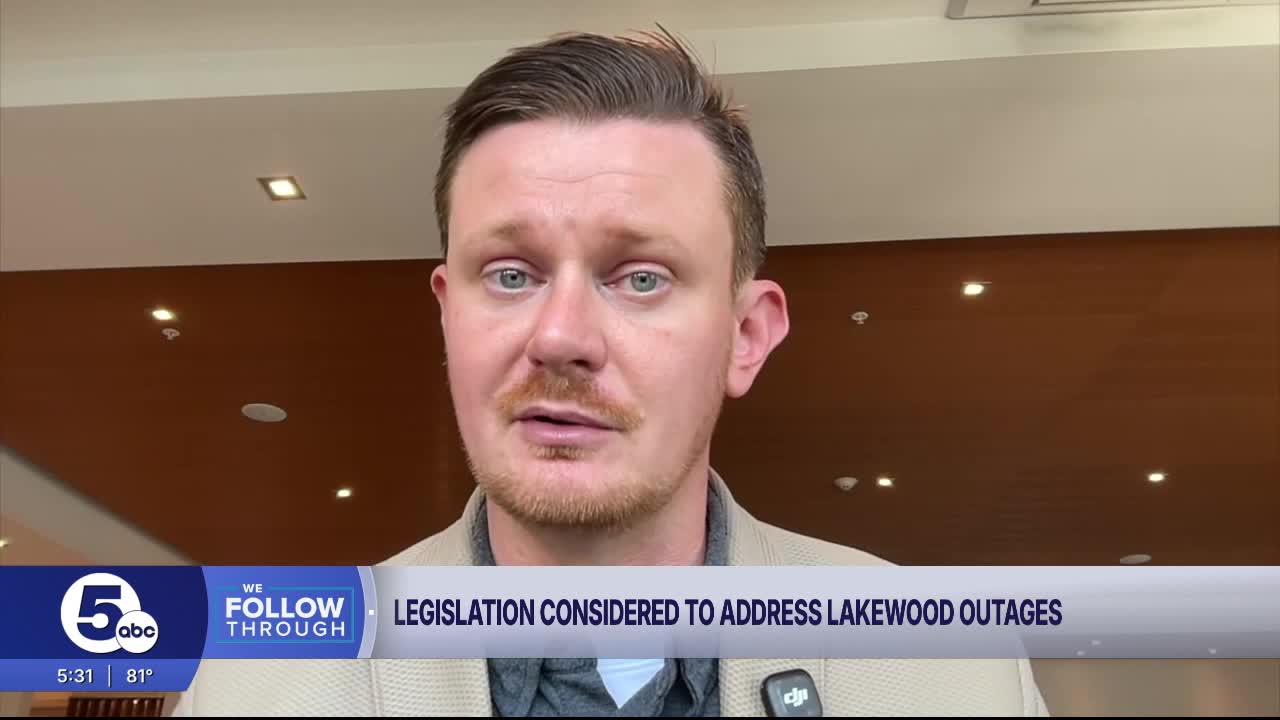
State Rep. Tristan Rader, who represents District 13, has introduced a bill that would require electric distribution utilities to reimburse residential customers for spoiled food and medicine and issue automatic bill credits when outages stretch beyond certain time thresholds.
"I think that people at least deserve to be compensated for the losses," Rader said. "It's time that we at least have some mechanism to recover some of those some of those things, especially food, especially medicine.”
Under the bill, the type of credit a customer receives depends on the conditions that caused the outage and how long power remains out:
- Normal conditions (outages affecting 1% or fewer customers): Credits kick in after 16 hours, equal to $50 or the customer's monthly bill, plus an equal credit for every additional 24 hours without power
- Gray sky conditions (outages affecting more than 1% but less than 10% of customers): Credits begin after 36 hours, on the same terms
- Catastrophic conditions (outages affecting 10% or more of customers, or during a declared state of emergency): Credits begin after 72 hours, on the same terms
- Repeat outages: Customers who experience six or more sustained interruptions in a 12-month period would also qualify for a bill credit
"This bill also includes an automatic credit of $50 or your monthly bill every 24 hours. The power is out, so there's an automatic credit on top of that," Rader said.
Beyond bill credits, the bill would require utilities to provide customers with a reimbursement form for food and medicine lost due to a lack of refrigeration. Customers who submit a self-certified list of lost items could receive up to $250. Those who provide documentation of actual losses could receive up to $600. Customers with documented losses of refrigerated prescription medicine would be reimbursed for the full cost of that medication.
Critically, the bill prohibits utilities from putting those reimbursement costs on customers.
"You cannot pass these costs on to customers. It has to come out of the profits of the utility because, at the end of the day, we don't want to inflate people's bills because of this reimbursement program," Rader said.
When we asked FirstEnergy last week whether the company planned to offer reimbursements, Ohio President Torrence Hinton did not make any commitments.
"We're working through a couple of things relative to the PUCO. I can't speak in terms of what may come in the future, but that's something that, of course, will be part of consideration," Hinton said.
When pressed on whether the $3 million forfeiture could be directed toward customer reimbursements, Hinton remained noncommittal.
"Again, that's something we're going to work through. So I don't want to get ahead of it," Hinton said.
Rader, a former Lakewood council member who is familiar with the outage challenges residents have faced, said FirstEnergy should see the bill as an opportunity.
"They should take us up on this bill. They should join us in supporting these efforts to do exactly what they're saying they want to do and reinvesting that money back in the community, so we're giving them an opportunity to join us here and be a partner in developing this legislation," Rader said.
It remains unclear if or when FirstEnergy will take any action on reimbursements.
Nadeen Abusada is a Cuyahoga County and immigration reporter at News 5 Cleveland. Follow her on Instagram NadeenAbusada or email her at Nadeen.Abusada@wews.com.
