




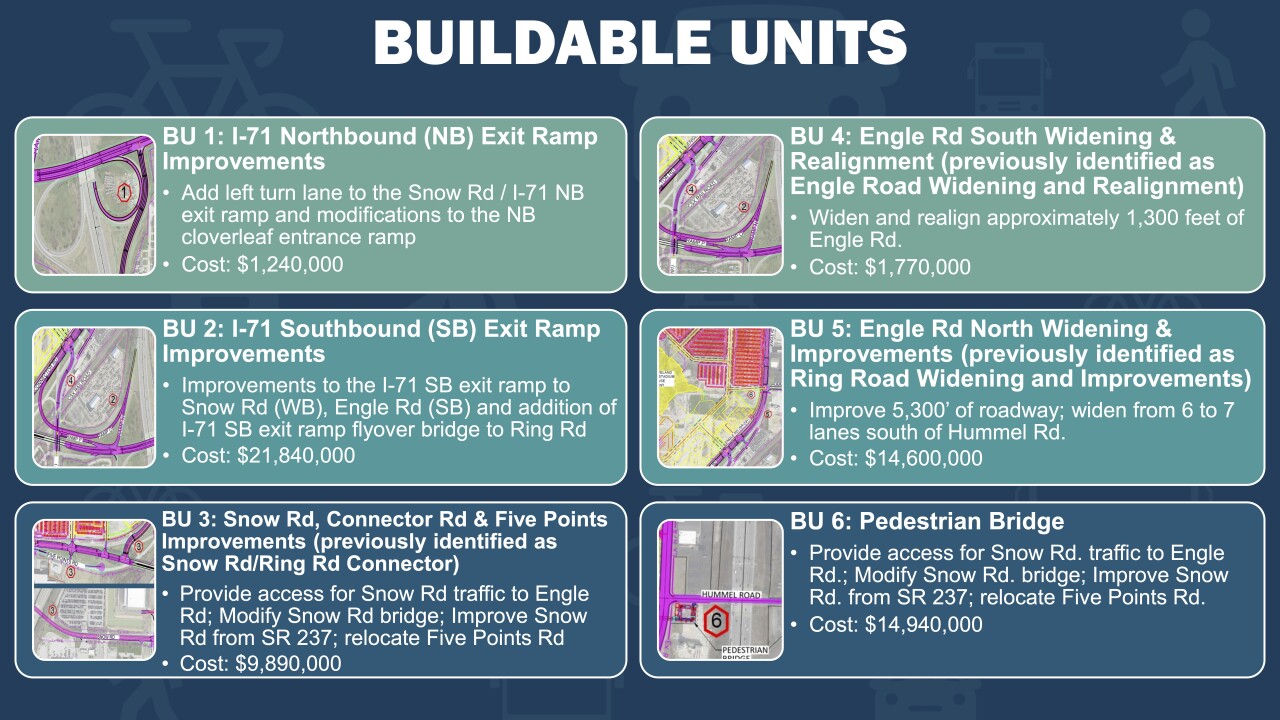
CLEVELAND — A $70.3 million proposal for road changes and public-infrastructure upgrades near the future home of the Cleveland Browns won approval Friday from a key planning agency.
The Northeast Ohio Areawide Coordinating Agency’s board of directors greenlit the projects in a near-unanimous vote. The decision marks the end of an 8-month-long review process — and puts Brook Park and the Browns a big step closer to being able to tap federal money to help pay for transportation work.
RELATED: Regional planning agency pumps brakes on road plans for new Browns stadium; wants more info
NOACA is a metropolitan planning agency focused on transportation, air quality and water quality. The organization has oversight of major transportation projects in Cuyahoga, Geauga, Lake, Lorain and Medina counties and opens doors to federal funding for highways and bridges, along with projects related to cycling and public transit.
Brook Park is seeking federal and state grants to make it easier for people to get to and from the new stadium site.
The lineup of projects approved by NOACA’s board calls for reconfiguring freeway ramps at Interstate 71 and Snow Road; streamlining and upgrading local streets, including Snow and Engle roads; and building a pedestrian bridge over Engle near Hummel Road, just east of the future stadium and mixed-use entertainment district.
The proposal started working its way through a series of NOACA advisory councils and committees last summer. And Friday’s board vote doesn’t end the conversation. Over the next few months, NOACA’s board will navigate the process of adding Brook Park’s projects to its long-range plan — a framework for federally funded transportation projects.
Before Friday’s vote, board member John Plecnik wanted to make one thing clear.
“In no way are we voting on whether or not the Browns should leave Cleveland — which I strongly oppose,” said Plecnik, a Lake County Commissioner. “And in no way are we voting on whether we should be using 600 million dollars of unclaimed funds from the taxpayers to fund a stadium for a billionaire — which I strongly oppose.
“Instead, we are being asked whether or not to vote on the planning process of the city of Brook Park, which is going to have massive changes in traffic patterns.”
NOACA’s in-house analysis, which included data provided by consultants working for the Browns, shows that Brook Park’s proposed road changes will help reduce snarls in the immediate area. The agency believes game-day traffic and large events won’t lead to significant delays for people coming and going at nearby Cleveland Hopkins International Airport or Southwest General Health Center in neighboring Middleburg Heights.
“The highway network has sufficient capacity to deal with the traffic … from the new development,” said Grace Gallucci, NOACA’s executive director and CEO.
But there will be slowdowns on local roads, particularly on weekday afternoons and evenings when major events are happening at the stadium. NOACA’s staff recently flagged possible pinch points in nearby cities, including Berea, Cleveland, Middleburg Heights and Parma, according to a presentation at Friday’s meeting.
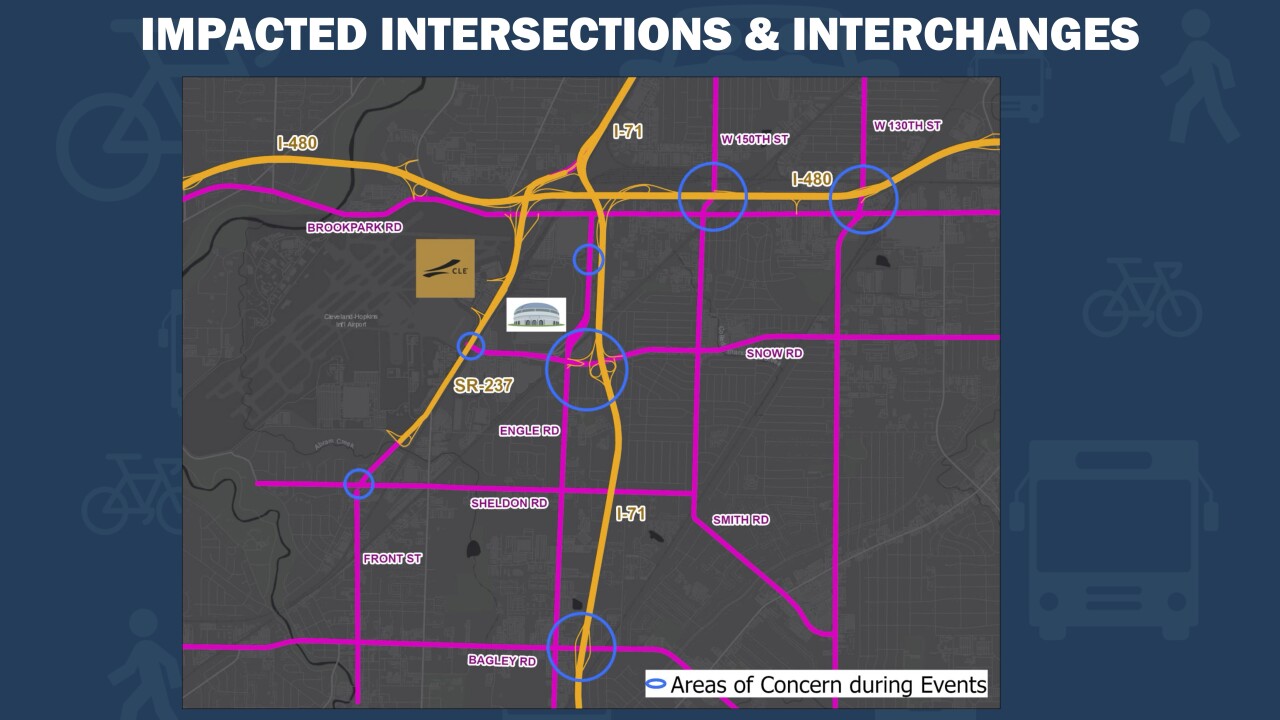
“We are concerned about those outlying communities,” Gallucci said. “And that will be phase two.”
NOACA’s board asked the Brook Park project team to take a deeper look at potential traffic tangles in other cities — and possible fixes.
But it’s unclear how sweeping that analysis will be. It’s also unclear who will pay for roadwork outside of Brook Park, if it’s necessary. Consultants working with the Browns and Brook Park already are doing a separate study of Bagley Road, in Middleburg Heights.
“We’re just concerned that there’s a lot being pushed to phase two … without fully understanding all of the impacts and all of the improvements and, ultimately, all of the dollars that are going to be necessary to address the congestion,” said Debbie Berry, the deputy chief of integrated development for Cuyahoga County.
She was filling in for Cuyahoga County Executive Chris Ronayne, a NOACA board member who has been a steadfast critic of the suburban stadium project.
Berry ultimately abstained from voting on Brook Park’s plans. The only “no” vote came from Jim Petras, the new mayor of Cleveland Heights.
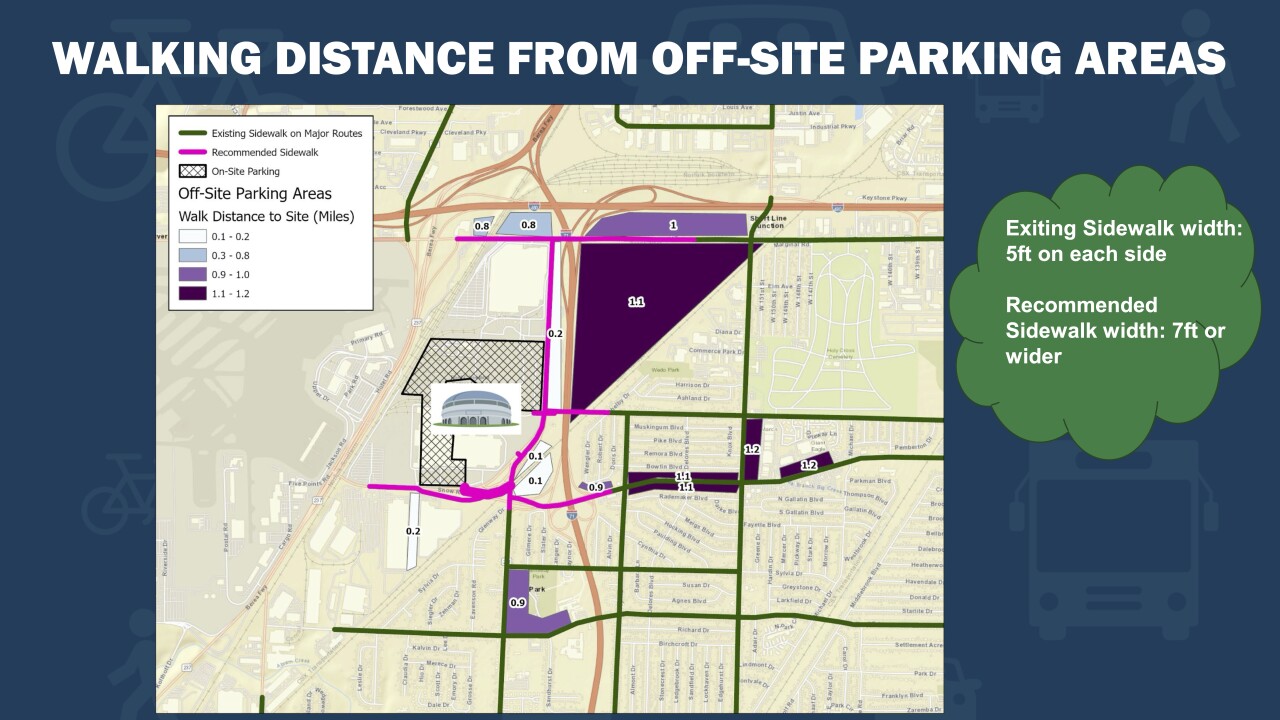
A few board members echoed the call for a more regional traffic analysis. They also asked about the project team’s plans for sidewalks, pedestrian paths and off-site parking. Berry noted that people walking from off-site parking lots will stop car traffic as they cross streets — something that isn’t fully reflected in NOACA’s models.
Brook Park Mayor Edward Orcutt and consultants working with the Browns didn’t get an opportunity to speak during the meeting. After the vote, Orcutt reiterated that he’s planning to launch a traffic command center and use cameras to pinpoint and ease congestion.
“We’re going to be able to man those intersections that are important so that we can make sure that we can put people across the street in a safe manner,” he said.
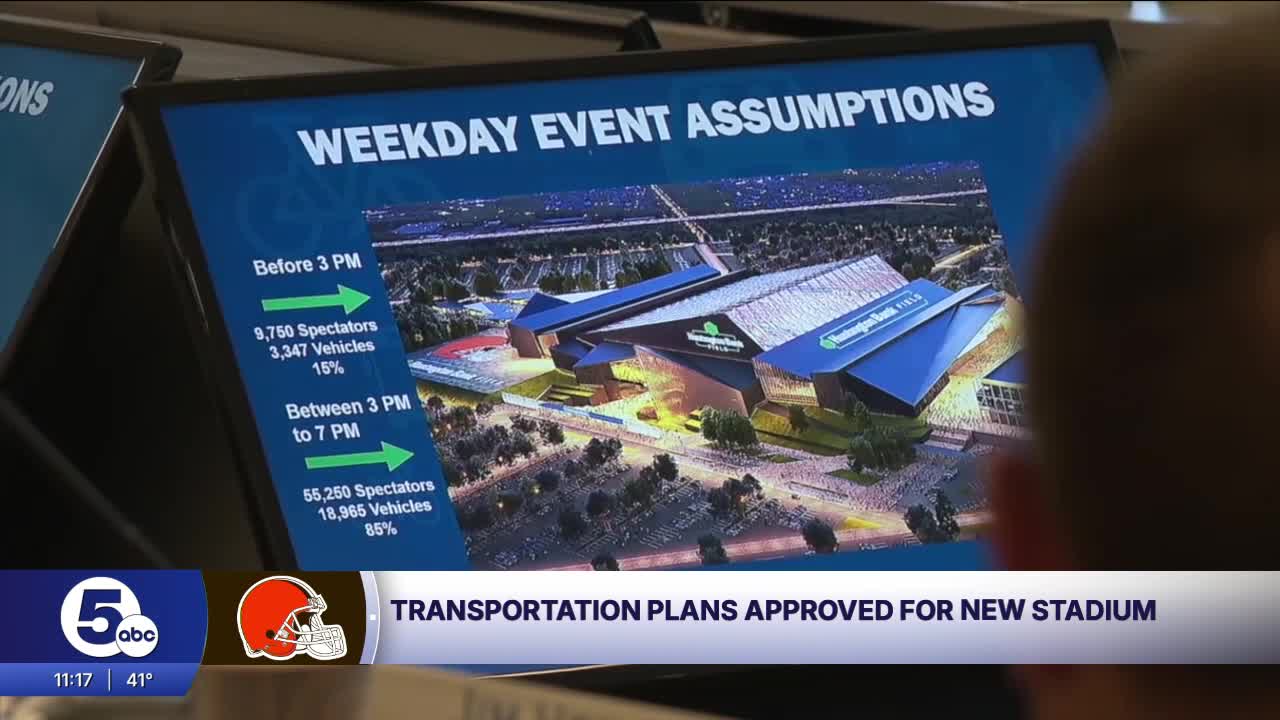
The Browns’ most recent plans show 9,000 to 9,500 game-day parking spaces on the stadum site.
NOACA’s analysis assumes that fans will arrive in roughly 22,300 cars. If that’s correct, there will be a need for 13,000 off-site parking spaces.
RELATED: Report says Browns will be short 10,000 parking spots on game days in Brook Park
“I do want to remind everyone that there’s only 20 major events a year that we’re looking at,” Orcutt said. “Which out of 365 days is less than 6%. I know it might be a bit of a sacrifice for everyone … but this is about bringing jobs to our region. This is about people visiting our area and spending money.”
Brook Park’s planning commission is vetting the team’s preliminary development plan, which outlines the scope of the project and spells out design guidelines for mixed-use development around the stadium. The commission is scheduled to vote on that plan during a special meeting on March 24.
“Obviously we have a lot more work to do on the project itself — the entire project,” Orcutt said. “But I feel really good. This is just another step forward, and we’ll continue to work on all the other details that are necessary for us to be successful.”
He’s also optimistic about Brook Park’s chances to get some money from the state, through Ohio’s Transportation Review Advisory Council, or TRAC. The nine-member body, appointed by the governor and the heads of the Ohio House and Senate, evaluates major transportation projects for competitive state funding.
The council is set to vote on a draft list of funding recommendations March 25.
Brook Park asked for the full $70.3 million. But TRAC only has $150 million to award — and more than two dozen projects across the state are vying for cash.
The city also has applied for a $25 million federal grant to help pay for some of the road improvements.
Michelle Jarboe is the business growth and development reporter at News 5 Cleveland. Follow her on X @MJarboe or email her at Michelle.Jarboe@wews.com.
