

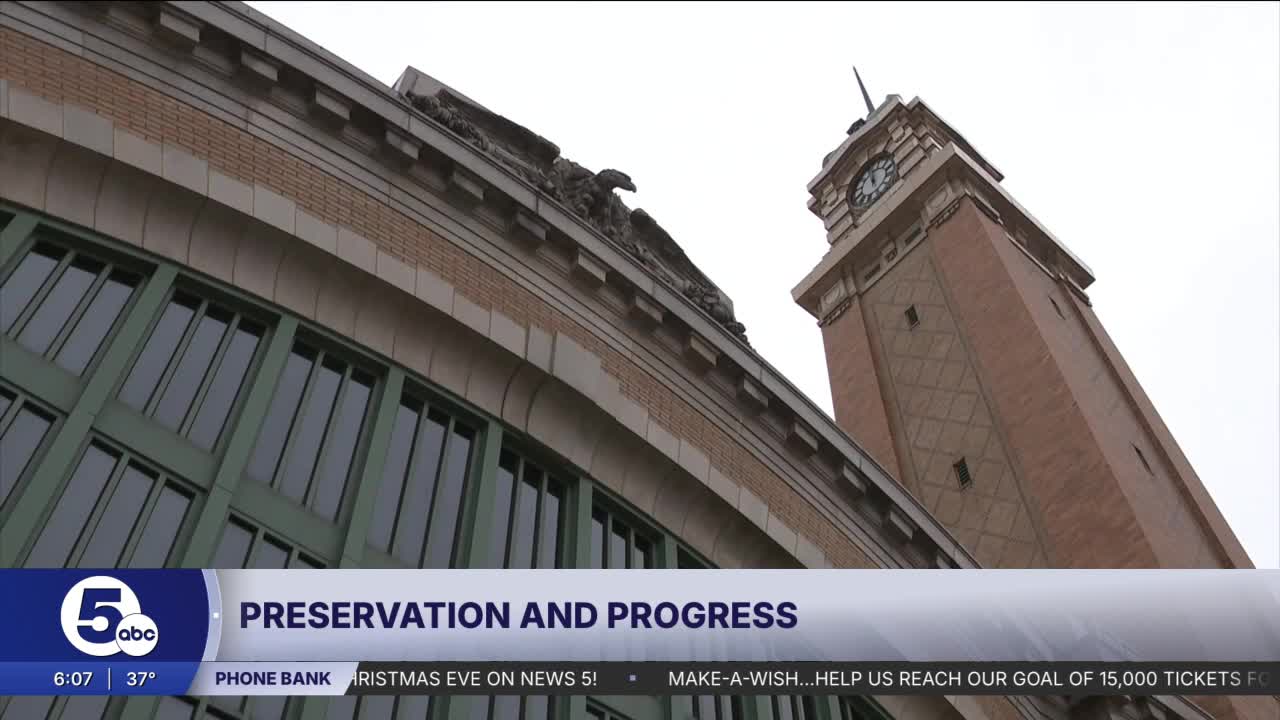



CLEVELAND — State historic tax credits will help fuel a transformation of the West Side Market and the revival of a historic Flats flour mill as a hotel, restaurant and event space.
The Ohio Department of Development allocated more than $75 million in tax credits on Wednesday to 33 preservation projects across the state. Northeast Ohio was a huge winner, with 13 projects landing roughly $34 million in awards.
Property owners don’t actually receive the credits until their projects are done. They typically sell the promise of the credits to investors, at a discount, to raise up-front cash for construction. Ohio makes competitive awards twice each year, and demand for the credits almost always exceeds the supply.
"Historic preservation is not just about protecting buildings," Lydia Mihalik, the state's development director, said during an announcement event at the market Wednesday morning. "We're protecting the places where stories are told. Where memories are made. Where communities come together and connect through something larger than themselves."
At the West Side Market, a $5 million state award will help narrow the funding gap for the second stage of a massive makeover. Construction started this year on the roughly $70 million renovation project, with help from public, private and philanthropic money.
RELATED: 'It is happening.' A behind-the-scenes look at the West Side Market as renovations begin
The city of Cleveland, which owns the landmark property, turned over management and operations of the market to a nonprofit in 2024. That transition opened up new sources of renovation funding, including grants and federal and state historic tax credits.
The Cleveland Public Market Corporation is still raising money for the project.
“This really puts us much closer to where we need to be,” said Rosemary Mudry, the nonprofit’s executive director.
On Wednesday, public officials, preservationists and supporters gathered to celebrate the win in the former men's locker room at the market hall. The vacant room offers views of Downtown and the bustling market floor, filled with vendors and shoppers.
"The future of this space will be an event space, where we can welcome you with heating and air conditioning and true seating," Mudry said, prompting laughter from the crowd.
Historically, the state tax credit program has favored empty or near-vacant buildings, making it difficult for occupied properties like the West Side Market to compete. But state lawmakers changed the scoring process this year, eliminating extra points for vacancy.
“These dollars coming into the project … are so meaningful,” Mudry said during an interview before the event. “These large buckets really help us … march towards our goal.”
Now the nonprofit has a little less than $14 million left to raise. The Cleveland Public Market Corporation aims to finish that fundraising by next fall, to keep construction moving seamlessly and avoid any cost increases from slowdowns, stops and starts.
Work started in the spring to renovate one arm of the L-shaped produce arcade as a consolidated produce hall. The other side of the arcade will serve as a staging area during construction, but it’s ultimately earmarked for prepared-food vendors, tables and chairs.
The market’s basement will be gutted and filled with new coolers and a commercial kitchen. The project also involves installing modern heating and cooling systems to make the buildings more comfortable for shoppers, vendors and employees.
The second stage of construction will include restoring historic windows and doors, turning the long-vacant locker rooms into a teaching kitchen and event space, converting the north arm of the arcade into the prepared-foods hub and linking the buildings with a courtyard.
“Multiple levels of government recognize how important the project is to our region,” Mudry said, pointing to buy-in from the city, Cuyahoga County and the state.
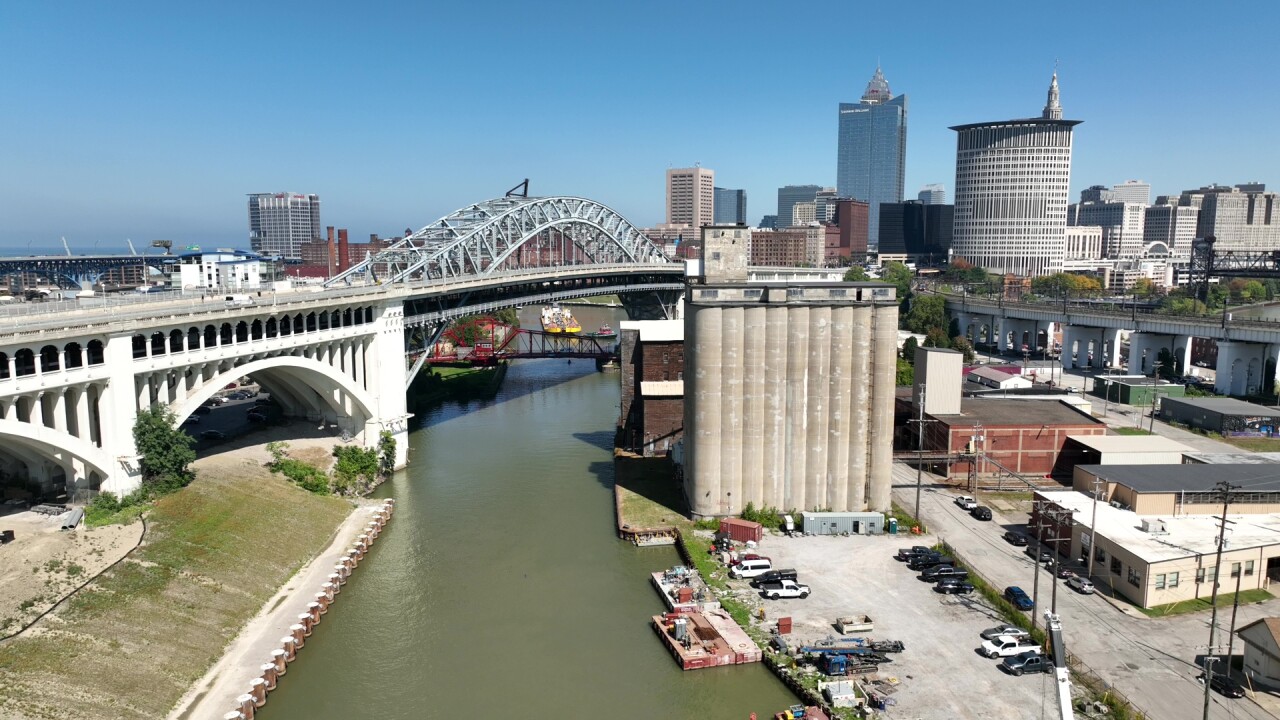
Less than a mile away, in the Flats, another $5 million award will flow to the former Grain Craft mill on the Columbus Road Peninsula.
The mill closed in 2020, and the Cleveland Metroparks bought the property in 2023 as part of the park steward’s efforts to increase public access to the waterfront. Earlier this year, the Metroparks picked a local development team to shape the future of the property.
Ceres + LaPine Development LLC hopes to preserve the historic mill, which dates to the 1800s, and revive it as a 147-room hotel. Plans drawn up by Cleveland-based Sandvick Architects call for selectively cutting windows and doors in the brick mill building and grain elevators for hotel rooms and a pass-through for a new riverfront trail.
“It’s just so fun,” co-developer Susan LaPine said during an interview this week. “The idea of staying in a circle-shaped hotel room that actually was full of grain. It’s very exciting. And it’s gonna be a great place for events, for weddings, for conventions, perhaps.”
LaPine is teaming up on the project with David Crisafi of Ceres Enterprises, a family-owned development company that owns and operates hotels. The partners previously took on two historic NASA buildings in Fairview Park and turned them into the Orbit Hotel and an apartment complex called the Centaur. They’re working on other hotel projects nearby.
Crisafi and LaPine aren’t ready to talk about their full vision for the roughly 3.3-acre Metroparks site in the Flats. They wouldn’t identify the hotel brand they have in mind or talk in detail about the restaurant, event space and other tenants they’re lining up.
But they said the state tax credit award gives the ambitious project – with a roughly $60 million price tag for the first phase – some early momentum. They’re also seeking $10 million in federal historic tax credits, which are not competitive.
“It is very ambitious,” LaPine said of the vision. “But it is totally unique.”
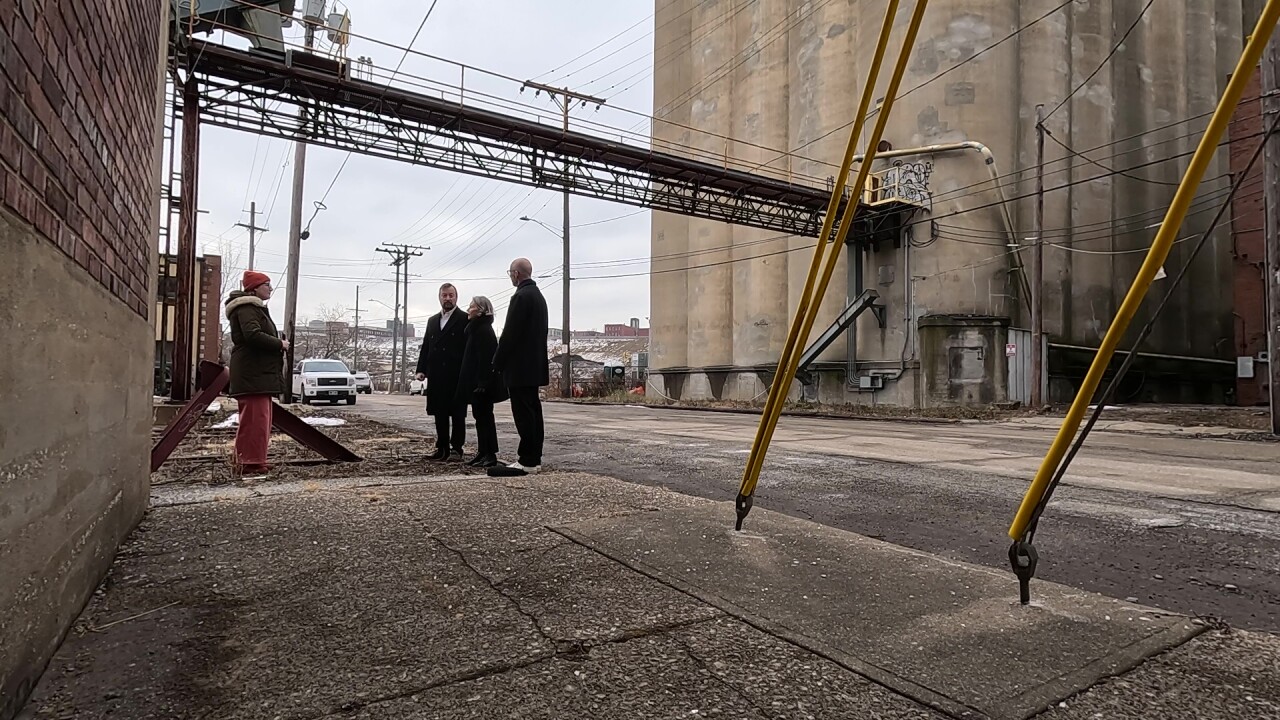
Crisafi said restoring the old mill is the first, and trickiest, step. The partners hope to start construction in 2027.
“There’s only very few of these flour mills that have been redeveloped in the country. … Everything else will come if we just focus on this,” he said.
Metroparks CEO Brian Zimmerman said he’s thrilled that the developers won the full amount of state tax credits they were seeking – the maximum award they were eligible for.
“This important investment lends great potential to preserving historic assets while thoughtfully reimagining them for the future,” he wrote in an emailed statement. “We are excited to see this project move forward and to continue partnership on development that enhances public access to the Cuyahoga River. The future realization of a contiguous riverwalk will be transformative – further connecting our communities, celebrating our natural resources and solidifying Cleveland’s identify as a vibrant waterfront city.”
The other Northeast Ohio tax credit winners are:
The Renkert Building in Canton: This is another Ceres Enterprises project, in partnership with Coon Restoration, to revive a vacant office building on Market Avenue as a 111-room hotel with a first-floor restaurant.
The tricky redevelopment has been on the drawing board for years and previously won state historic tax credits. But the state rescinded the award because the rest of the funding didn’t come together.
Now the development team is taking another run at the deal. The $53 million project won $5 million in credits.
Young Women’s Christian Association in Akron: This former YWCA property will become apartments, in a project being tackled by Welty Development Group. The city of Akron sold the largely vacant building to Welty this year.
The $45 million project previously received state tax credits but reapplied for more money. On Wednesday, the state increased the award to $5 million.
New England Building in Cleveland: This $41 million project will turn the Holiday Inn Express Cleveland hotel on Euclid Avenue into an AC Hotel, a Marriott brand.
The redevelopment won $3.25 million in tax credits.
Holiday Inn, Cleveland: The state awarded $3.3 million in credits to a developer’s proposal to resurrect a former Holiday Inn in Midtown as 198 apartments. The property, at 3614 Euclid Ave., is vacant. It last operated as the University Hotel & Suites.
A previous plan to turn the building into a Delta by Marriott hotel fell through.
McKinley School in Cleveland: This vacant Cleveland elementary school building will be fixed up for the Global Ambassadors Language Academy, a free charter school that is expanding on the city’s West Side.
The $18 million renovation project won $1.8 million in tax credits. Construction will include turning the former auditorium into a cafeteria.
GALA, a Mandarin- and Spanish-immersion school, originally won state tax credits for the project in 2023. But progress stalled, and the academy filed a new application.
Lakewood Baptist Church: This former Lakewood church, at 14321 Detroit Ave., is slated to become a daycare and early childhood learning center.
Horizon Education Centers acquired the property this year and is planning a nearly $6.2 million renovation project. The state awarded it $1.5 million in credits.
State Chemical/Superior St. Baptist Church in Cleveland: These empty buildings, on Superior Avenue just east of Downtown, will become a restaurant and event space, with room for art galleries and offices.
They’re part of a much larger overhaul of several blocks of the Superior Arts District being led by TurnDev, a busy Northeast Ohio developer. A TurnDev affiliate took control of the former State Chemical Manufacturing Co. building and the church earlier this year.
The $11 million project won $1.1 million in tax credits.
Wadsworth Central School: This former Medina County school will be repurposed as an event space, with a dance studio, restaurant, bar and short-term rental and office uses.
The nearly $11 million project won just over $1 million in tax credits.
Case Building in Cleveland: This onetime retail building on West 25th Street, in the Ohio City neighborhood, will become a law office. The $6.8 million project won $960,000 in tax credits.
S.N. Nelson Block in Cleveland: This historic building, on West 25th Street in Ohio City, will become apartments, with new townhouses next door. The $6.7 million project will receive $813,000 in tax credits.
Miller Building in Cleveland: On West Ninth Street in the Warehouse District, this building will be renovated with five apartments upstairs. The Map Room bar and restaurant will stay put on the first floor. The $1.3 million project won $312,500 in tax credits.
Michelle Jarboe is the business growth and development reporter at News 5 Cleveland. Follow her on X @MJarboe or email her at Michelle.Jarboe@wews.com.
