

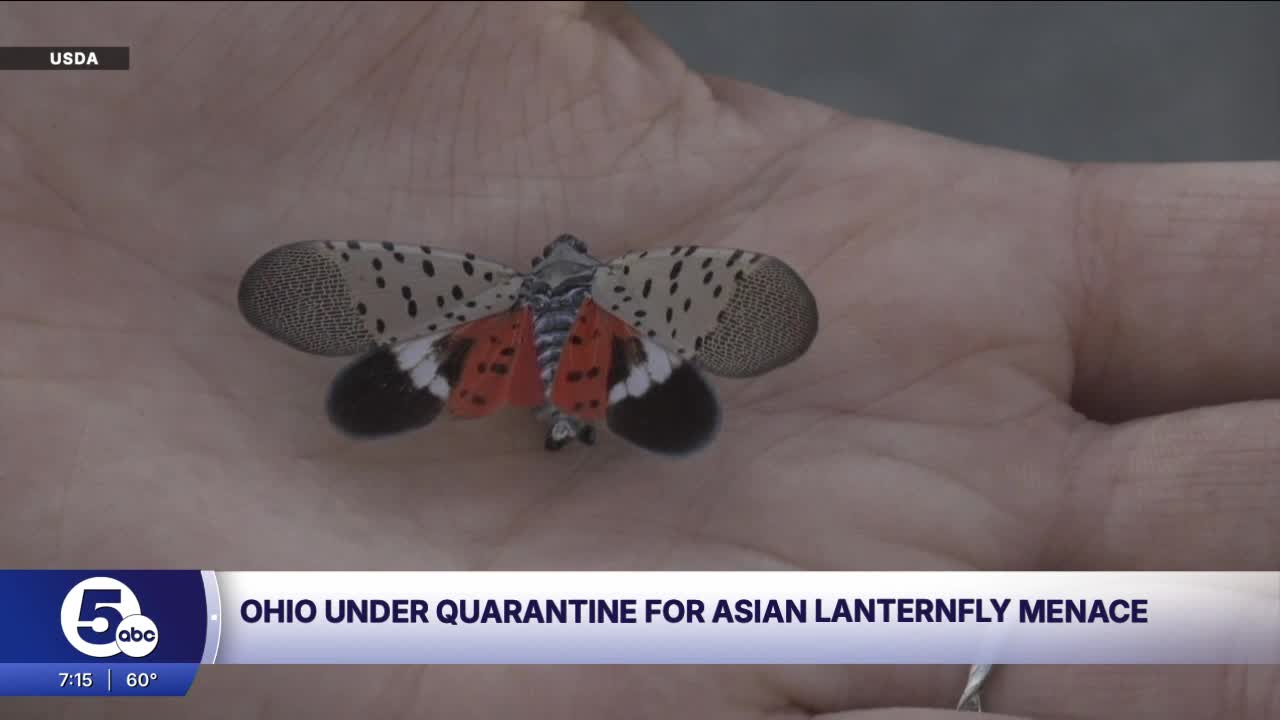


CLEVELAND — The Ohio Department of Agriculture issued a statewide quarantine on Tuesday to fight the looming spotted lanternfly threat, which has been increasing each year.
According to state officials, the quarantine means that trees at Ohio nurseries and plant stores cannot be moved out of state without a permit, inspection certificate, or compliance agreement. Trees shipped to non-regulated areas must be inspected and must have a certificate showing they are free of spotted lanternflies.
Prior to this year, the state had requested spotted lanternfly sightings be reported to the Ohio Department of Agriculture. Now, due to their abundance, the state is advising how to manage and deal with the pests.
CLICK HERE to read the spotted lanternfly management guide.
Watch what you can do to stop the spread of the invasive species:
RELATED: Are we losing the war against the spotted lanternfly?
At this time, spotted lanternflies aren’t full-grown yet. Instead, they appear as patches that can be found on the trunks and branches of trees.
"You'll see that the eggs kind of look like a gray patch of Silly Putty. Initially, when they're laid, they're kind of shiny, and then eventually, through the winter, they get a dull grayish-white look,” said Thomas DeHaas, agriculture and natural resources educator at Ohio State University.
DeHaas adds that when you see them, you can try to get rid of them early.
"People can keep an eye out right now for egg masses on trees, especially tree-of-heaven. They can scrape those off using a credit card or a piece of plastic, then put them in soapy water—that will kill the eggs,” said DeHaas.
But overall, Dehaas reminds everyone, they may be annoying, but these insects won’t harm you.
"The spotted lanternfly is an invasive pest that is known to cause harm to Ohio’s agricultural industry,” ODA Director Brian Baldridge said. “ODA is committed to protecting and preserving our plant life, and plant health experts are working with nurseries and wineries to reduce the negative impact of SLF.”
The invasive insect was first detected in the United States in 2014, when it was found in Pennsylvania. State officials believe they hitched a ride overseas on imported goods. Ohio first reported contact with the insects in 2020, and since then, they have become commonplace.
RELATED: Get ready to squash some more bugs. It's almost time for invasive spotted lanternflies to return.

While these bugs can't harm humans, they harm native plant life. The pesky insects feed on wood and flowery plants, leaving behind a sticky, sugary liquid that causes plants to wilt and become more susceptible to diseases. The bugs aren't a direct threat to trees, but they can rob trees of nutrients year after year, eventually causing the tree to die.
These insects can travel long distances by hitchhiking on cars and quickly spread to other areas.
Their presence over the last few years has raised concerns for Ohio’s wine industry, the sixth-largest in the U.S., which contributes more than $1 billion to the state's economy every year. More than 250 wineries across the state employ thousands of people.
RELATED: Local wineries concerned as invasive, destructive insect spotted in Ohio
