



COLUMBUS, Ohio — On the banks of the Scioto River, as it snakes through downtown Columbus, herons stalk fish as egrets wade in the shallows.
Wildlife isn’t the only thing the river sustains. The Scioto helps to feed a public water system that serves more than 1.4 million customers in this fast-growing stretch of the state, where advanced manufacturing and tech companies are driving job gains.
The top water users here include entire suburbs, an Anheuser-Busch brewery and bottling plant, Ohio State University — and a large Google data center in New Albany, a 20-minute drive northeast of downtown, according to public records.
As data center proposals proliferate across the country, neighbors are asking lots of questions about the industry’s approach to water. But it’s tough to get clear answers about how much water these facilities need for cooling, to keep increasingly powerful computing equipment from overheating.
WATCH THE STORY BELOW:
Data center operators — and other businesses — are often reluctant to talk about how much water they use, citing competition and trade secrets. Most data centers in the United States tap into public water systems, but confidentiality agreements and state laws allow companies to shield details about their water consumption. Ohio is one of several states where legislators are considering mandatory reporting requirements for the industry.
“It’s very difficult to craft conservation standards and efficiency standards when you don’t even know exactly how much water you’re talking about,” said Helena Volzer, director of water resources at the Alliance for the Great Lakes, a nonprofit focused on protecting the region’s water quality and supply.
But consumption figures from Columbus Water & Power, obtained through a public records request, provide some details — and context. The utility serves one of the nation’s data center hot spots, where developers have flocked thanks to heavy power, available land and state and local incentives.
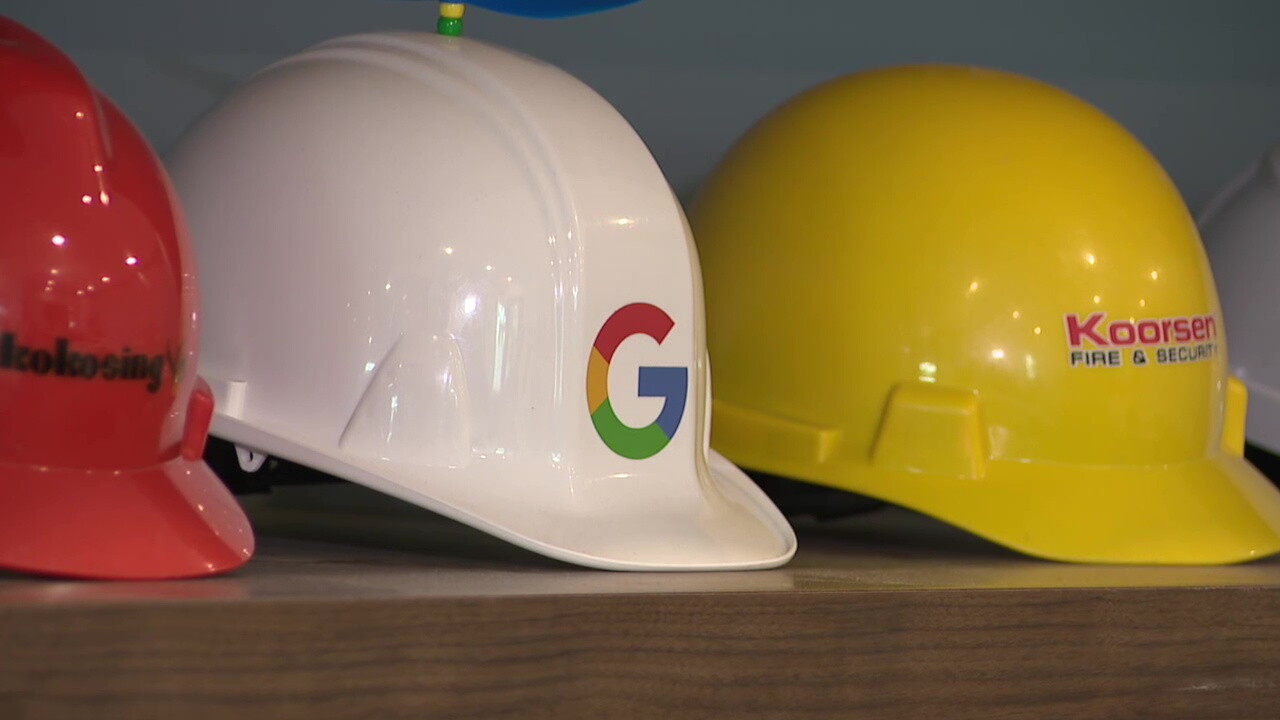
In 2025, companies affiliated with two Google data centers — one in New Albany, the other in Columbus — were among the top 10 customers in the water department’s footprint.
Records show Google’s New Albany data center used more than 1 billion gallons of water last year. That’s more water than the nearby suburb of Bexley, home to approximately 13,000 people, consumed. The Google data center in Columbus drew down approximately 448 million gallons last year, or about 1.2 million gallons a day.
But there aren’t many data centers on a list of the heaviest water users in the region. Near the top, along with Ohio State, Google and a handful of cities, you’ll find facilities that make and package all sorts of products, from beer and soft drinks to pet food, soaps, baby formula and synthetic rubber gloves.
John Newsome, the city’s water administrator, said data centers account for roughly 3% of overall consumption in the Columbus water department’s service area.
“People are gonna have different opinions of it,” he said of that number. “I would say 3 percent’s not a huge burden on our system.”
Last year, the department supplied 156 million gallons of water a day to customers across more than two dozen communities. That’s well below the system’s daily capacity of 245 million gallons, Newsome said.
He’s not worried about running out of water anytime soon. But he’s watchful.
“I’m not tapped into Lake Erie or the Ohio River. We’re in the middle of the state. We have to capture our water,” he said. “If we can find a very efficient way to continue to have industrial growth in our area, without compromising our water supply for drinking water, that buys us many, many generations into the future on water supply for central Ohio.”
'Not one-size-fits-all'
Industry reports and maps indicate there are more than 150 data centers operating or planned in central Ohio, ranging from closet-sized facilities to sprawling campuses.
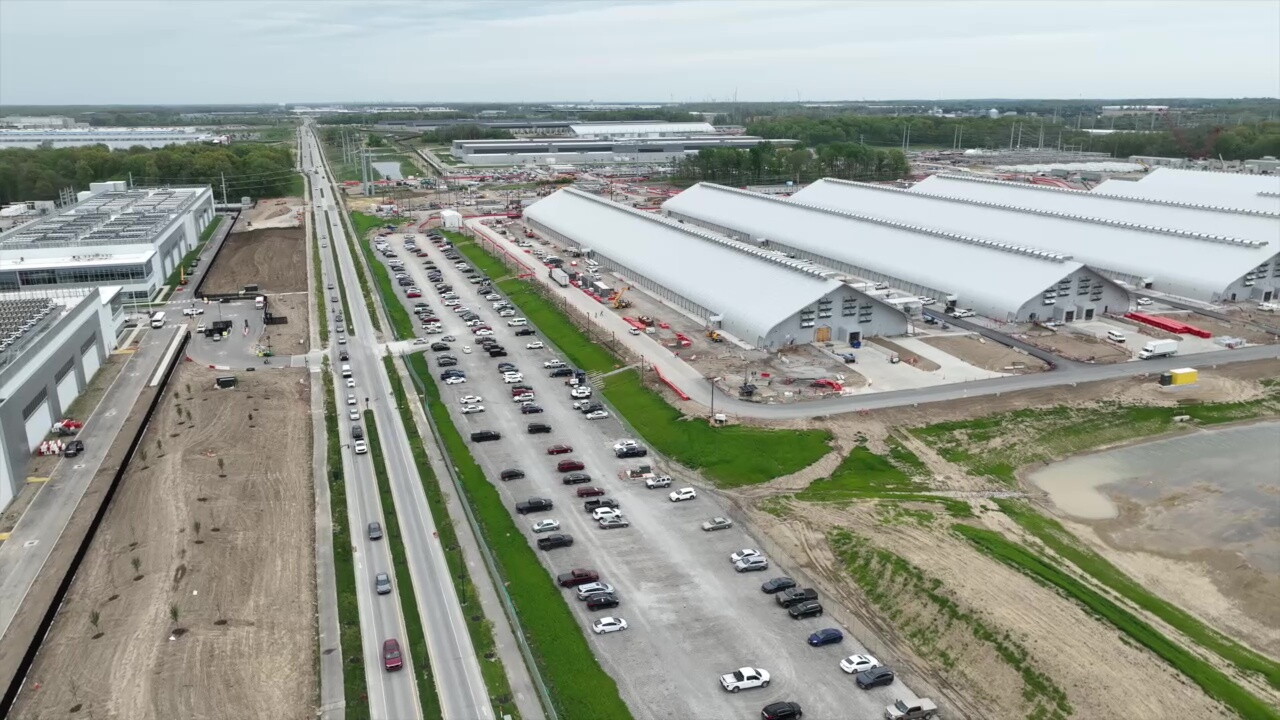
The New Albany International Business Park is home to 40 data centers so far, with more on the way. Amazon, Google, Meta and Microsoft all have planted a flag at the park, along with operators including QTS, CyrusOne, EdgeConneX and Vantage. They sit side-by-side with manufacturers, distributors and biotech companies.
WATCH: Ohio's data center boom really started in New Albany. Here's what it looks like.
In late 2025, the entire 12,000-acre business park consumed about 9 million gallons of water a day — about 56% of the 16 million gallons it’s entitled to under a service plan with the Columbus water department. That service plan was approved in 2015, long before New Albany became a destination for the data-center industry.
In most cases, it’s unclear how much water individual facilities are using. Columbus water officials see customer names and addresses. They don’t know for sure if a building is a data center, a manufacturing facility, a warehouse or a power plant.
Economic-development contracts between companies and New Albany spell out expectations around water use. But businesses typically ask public officials to black out that information when copies of those agreements are released, citing trade secrets.
And in early 2026, the state legislature started requiring public entities to treat any information related to economic-development assistance applications as confidential — a move that created tremendous uncertainty and the threat of criminal charges for officials. The Ohio General Assembly narrowed those new confidentiality requirements in June, but the recent updates to state law don’t take effect until Sept. 23.
Water use at data centers also varies dramatically, depending on where the facilities are located and how they cool down computer hardware, which throws off a lot of heat.
“Every time we are building a cooling system, it is based on that climate,” said Adam Kramer, who leads the data center group for Panattoni Development Company, a major real estate developer working on projects in Ohio and across the country. “And it’s based on the community. And it’s based off of the water infrastructure that is — or isn’t — available.”
Some data centers rely on air conditioning and fans to keep temperatures low.
There are water-based systems that cool the air through evaporation and “closed-loop” systems that recirculate coolants, like glycol, to absorb and release heat. Some data centers combine multiple methods, with different cooling systems inside and out.
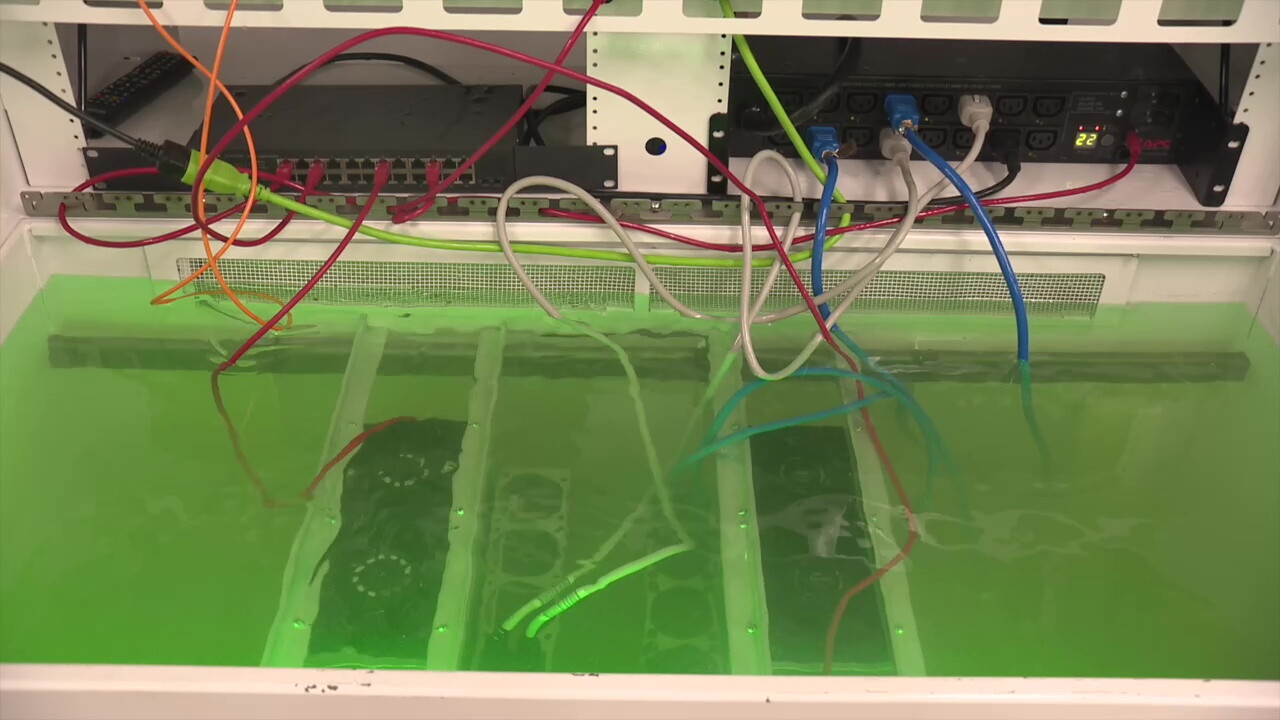
There’s also immersive cooling, which allows workers to submerge servers in tanks filled with a special, heat-absorbing fluid. Each approach has trade-offs when it comes to up-front costs, complexity and water and energy use.
“It’s important to make sure that our cooling decisions are not one-size-fits-all,” said Suzie Shin, who manages data center sustainability programs at Google.
The tech giant releases water-use information for its computing halls and offices as part of a yearly environmental report. The company has several data centers that use more than a billion gallons of drinkable water each year, like the one in New Albany.
But Google also uses air-cooling technology in some cities. A data center in Georgia depends on recycled wastewater, from toilets and sinks, for cooling.
“If there is scarcity or a high risk of scarcity or a high risk of depletion, then we look for alternatives,” said Shin, describing the company’s approach to water as “hyper-local.”
'We have a bucket'
Volzer, at the Alliance for the Great Lakes, wants to see disclosure requirements for all large water users. That would help policymakers and researchers get a better sense of who is consuming a lot of water — and how to manage demand.
She and her colleagues have been studying water use at data centers, digging into everything from how wastewater gets handled to how much water the industry indirectly consumes for off-site power generation. Much of that research focuses on the recent wave of massive projects, the so-called hyperscale facilities designed to meet the ever-growing demand for data processing, cloud storage and artificial intelligence.
“This is larger than anything we’ve seen before,” Volzer said.

It might seem odd to have a conversation about water availability in the Great Lakes region, which is home to 20% of the world’s surface freshwater supply.
But, Volzer said, “we have a responsibility to manage that water sustainably — for not just generations today, but generations to come.”
In Columbus, the water department recently flattened out its rate structure, getting rid of a system where commercial customers paid progressively lower rates as their water use increased. Officials are studying whether it makes sense to introduce a peak-rate system — like surge pricing — where businesses would pay more at times when their demand spikes.
Newsome’s also exploring the possibility of using wastewater for cooling, starting in an industrial area south of the city. That recycled water would flow through a separate set of pipes to data centers, manufacturers and other businesses.
The businesses would pay to build that new infrastructure, allowing the city to turn wastewater into a commodity. Companies tapped into that system could pay a lower rate.
“That’s very innovative,” Newsome said. “We have an opportunity to do it here, and we’re trying to take advantage of that opportunity.”
The water department hopes to solicit proposals for that project next year.
After all, Newsome said, “we only have so much water supply. We have a bucket. Once that bucket’s empty, then there’s no more water put in.”
Michelle Jarboe is the business growth and development reporter at News 5 Cleveland. Follow her on X @MJarboe or email her at Michelle.Jarboe@wews.com.
